

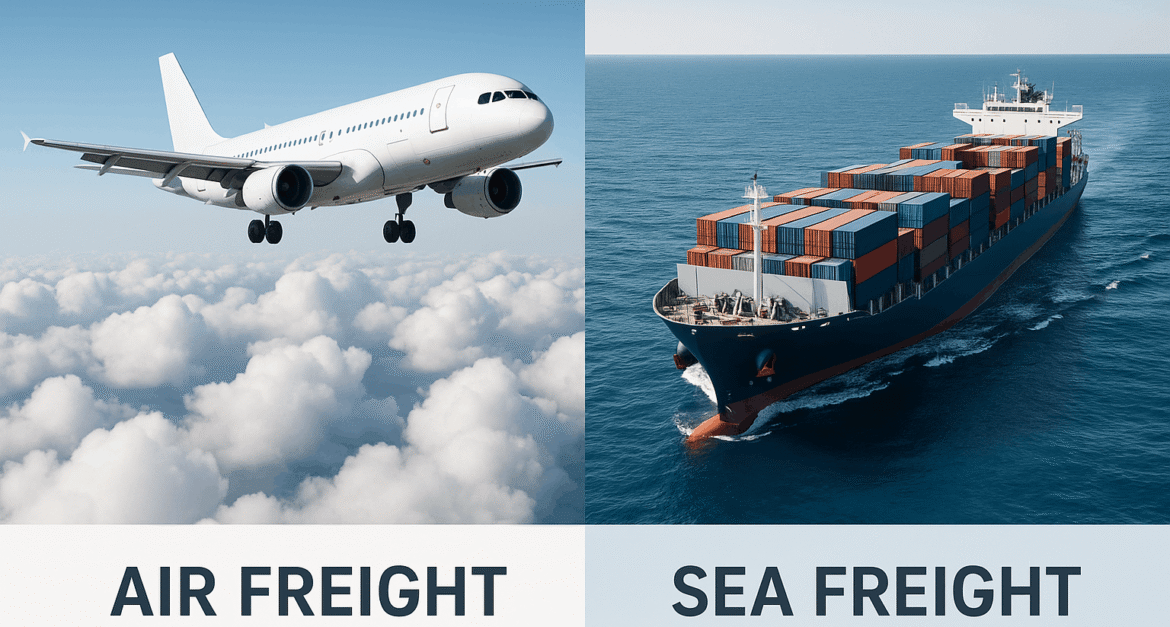
You are torn between airfreight and seafreight options in making your next large shipment?
It is understandable that, when it comes to international shipping, be it transportation of personal or commercial products, the process of selecting a mode of transport can be overwhelming. Are you flying as fast as air freight or are you as economical as sea freight? The incorrect choice that will be made could translate to setbacks, unnecessary expenditure and worst of all, missed opportunities.
Here’s the solution. This guide will simplify, clearly, and frankly break down all that you need to know about air and sea freight. Being a business owner, logistics manager, or a person who needs to move items across the borders, the article will allow you to conduct the right decision with certainty. We will consider costs, speed, reliability, environmental impact, and real-world application cases, and you will not have to doubt your choice of shipping decisions anymore.
Understanding the Basics of Freight Shipping
Freight shipping refers to the movement of commodities, goods, and cargo in large quantities in either land, sea, or air. The choice to use air or sea freight normally depends on:
- Type and value of goods
- Volume and weight
- Urgency
- Budget constraints
- Delivery destination
The air and sea freight are popular in international trade since they can serve in various sectors such as retail, e-commerce, construction, oil and gas, pharmaceuticals, electronics among others.
What Is Air Freight?
The air freight is the transportation of goods through airplanes. This may be via special cargo aircrafts or the cargo section of the passenger flights. The quickest way of shipping goods across borders is through it and is applicable to high value or perishable goods.
The major features of Air Freight:
- Speed: The product can be delivered within 1-7 days based on route.
- Security: The stricter the regulations, the less the risk is handled.
- Reliability: Predetermined timescales and reduced delays.
- Price: An increased charge, which is normally charged on weight (weight that can be charged or weight that can be charged by volume, whichever is the largest).
- Capacity: Small cargo size in comparison with sea transport.
Air freight is applicable in situations when time is of essence in delivery or the value of the products is very high to cover the cost.
What Is Sea Freight?

Sea freight/ ocean freight: It refers to the transportation of goods by large cargo ships over the international water. It is the cheapest mode of transportation of bulk cargo and can carry all kinds of goods and size.
The following are the main characteristics of sea freight:
- Speed: slower (usually between 20 and 45 days on the route).
- Price: Low when dealing with heavy and big consignments.
- Capacity: has the capability of transporting thousands of tons simultaneously.
- Flexibility: Appropriate in FCL (Full Container Load) and LCL (Less than Container Load).
- Environmental Impact: increased number of containers to air freight.
Sea freight is the most suitable in non urgent bulk shipments or in goods that are not urgent.
Side-by-Side Comparison: Air Freight vs. Sea Freight
| Feature | Air Freight | Sea Freight |
| Delivery Speed | 1–7 days | 20–45 days |
| Cost | High | Low |
| Volume Capacity | Limited | High |
| Security | High (more inspections) | Moderate |
| Environmental Impact | Higher emissions | Lower emissions per shipment |
| Risk of Delay | Low (fewer disruptions) | Moderate to high |
| Insurance Costs | Lower | Slightly higher |
| Customs Clearance | Faster | Slower |
When to Choose Air Freight
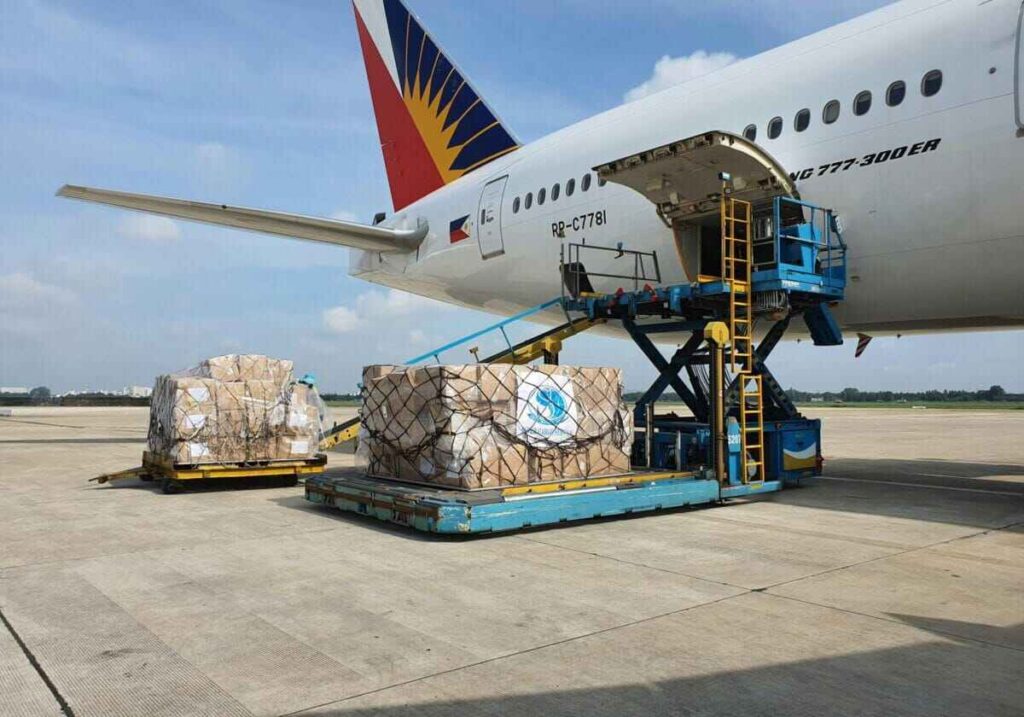
The most suitable is air freight in case of the following conditions:
- Urgent Deliveries: Have to get goods fast (e.g. within a week).
- High-Value Goods: It is items such as electronics, medical provision, or jewelry.
- Low Volume, High Margin: Smaller deliveries in which profit margin covers the cost of shipping.
- Security and Reliability: Minimal damage and theft or delays.
- Tight Supply Chains: Just-in-time models of lean inventory rely on just-in-time delivery.
Examples of Goods Shipped by Air:
- Electronics and Smartphones.
- Pharmaceuticals
- Fashion or seasonal items
- High-end cosmetics
- Spare parts for machinery
When to Choose Sea Freight
Sea freight is the better choice when:
- Shipping in Bulk: Full container or large volume of goods.
- Flexible Timelines: No urgency in delivery.
- Lower Costs Required: More economical per unit.
- Heavy or Oversized Items: Construction materials, industrial equipment, etc.
- Environmentally Conscious Shipping: Reduced emissions per container.
Examples of Goods Shipped via Sea:
- Furniture and home décor
- Construction equipment
- Non-perishable food
- Apparel in bulk
- Raw materials (chemicals, metals, lumber)
Cost Structure Comparison
Air Freight Costs:
- Charged by chargeable weight = (Volumetric weight or actual weight)
- Volumetric weight = (Length × Width × Height in cm) ÷ 6000
- Fuel surcharges and security fees apply
Sea Freight Costs:
- Charged by container volume (CBM) or weight (whichever is higher)
- CBM = (Length × Width × Height in meters)
- Lower per-unit cost, but port and customs fees add up
Example Calculation:
If shipping 5 boxes, each 1.1m × 0.5m × 0.7m:
- Total CBM = 1.925 CBM
- Chargeable Air Weight = 385 kg
- Chargeable Sea Weight = 321.5 kg
Sea freight is more cost-effective for this volume.
Risks and Delays
Air Freight Risks:
- Weather, strikes, flight delays.
- Constrained by the accessibility of airports.
- Regulatory limitations (e.g. dangerous goods)
Sea Freight Risks:
- Congestion and delay at the ports and customs.
- Containers or vessel space unavailable.
- Rerouting and increased commuting time.
There are risks involved in both of those methods, although with the planning and the collaboration with a seasoned freight forwarder, the vast majority of the problems can be eliminated.
Environmental Considerations
The question of sustainability is significant to most businesses nowadays.
- Air Freight: Increased CO 2 per kilogram of shipment.
- Sea Freight: Eco-friendly with bulk cargo, reduces the emissions per ton.
In case carbon footprint reduction is of high priority, then sea freight is usually a more appropriate choice.
How Palm Horizon Logistics Supports You
At Palm Horizon Logistics, we will provide custom air and sea logistics services within KSA and international routes. The logistics experts assist the clients in selecting the most efficient, cost-effective, and time-saving shipping options according to their individual requirements.
Why Businesses Trust Us:
- Access to major global air and sea routes
- Competitive freight rates
- Expertise in customs clearance
- Real-time tracking and shipment visibility
- Local and international agent networks
- Secure and compliant handling of all cargo types
We serve clients in IT, electronics, FMCG, e-commerce, fashion, oil & gas, humanitarian relief, and construction.
Whether you need a shipment to move urgently via air or want cost savings with sea freight, we deliver the right solutions.
Sea Freight Challenges in 2024–2025
Recently, many businesses have faced:
- Container shortages
- Vessel overbooking
- Route disruptions
- Port congestion
- Skyrocketing rates
Consequently, most have turned to air freight as a temporary temporary solution in order to have deliveries within a short period. In Palm Horizon, we assist you in sailing through these market swings by booking room early, providing multimodal services, and benching improved freight rates via our international network.
Final Thoughts: Which Freight Method Is Right for You?
There’s no one-size-fits-all answer. Your decision should be based on the following:
- Timeline: If you need fast delivery, choose air.
- Budget: If cost is more important, sea freight wins.
- Type of Goods: Fragile or high-value = air; bulky or heavy = sea.
- Volume: Low volume = air; high volume = sea.
- Destination: Accessibility of ports vs. airports
Summary Table:
| Situation | Best Option |
| Need delivery in under a week | Air Freight |
| Shipping 20+ cubic meters of goods | Sea Freight |
| Small, high-value products | Air Freight |
| Long-distance but non-urgent cargo | Sea Freight |
| Unpredictable sea schedule | Air Freight |
Contact Palm Horizon for Your Freight Needs
Choosing between air and sea freight is easier when you have the right partner. At Palm Horizon Logistics, we’re committed to helping your business move smarter.
From booking space to managing customs and final delivery—we make shipping simple. Whether you’re a small business or a global brand, we’ve got the right freight solution for you.
Let’s get your cargo moving today.
Frequently Asked Questions (FAQs)
Which is cheaper with air freight or sea freight?
The transport via the seas is usually cheaper especially when dealing with a shipment that is heavy or large. When cost is the main problem, sea transport is normally the best.
How long is the sea freight compared to air freight?
The sea transport can range between 20 and 40 days depending on the route and the air transport can take 3-7 days. In case of speed, the solution is air freight.
Is air freight more trustworthy compared to the sea freight?
Yes. Air freight is also less predictable because it is associated with schedule and delivery time. Flights can take up to a day to get delayed, but alternatively, port congestion, weather and custom are likely to influence the sea freight.
What kind of goods would air transport best suit?
Air freight is most appropriate in the products or documents that are highly sensitive in terms of time or volume like electronics, pharmaceuticals and documents.
What kind of commodities will be transported by sea?
Retailers have furniture, machinery, raw materials or large shipments that are heavy and bulky or not urgent and hence it is better suited on the sea.
Is airfreight eco friendly?
Not really. Airfreight has more carbon footprint compared to the sea freight. However, the sea transportation may also translate to effects to the marine life especially during oil spills.
Can there be a tracking of air and sea deliveries?
Yes. Most modern logistical companies offer real-time monitoring of air and sea deliveries, but it is the air freight that is being tracked more accurately and frequently.

1 Comment
Steps Logistics Companies Take for Safe Delivery in KSA September,09 2026
[…] of delays in Saudi logistics. Smooth logistics will involve perfect documentation in line with the SABER, ZATCA, and WTO specifications. Palm Horizon offers professional consulting services on compliance […]