

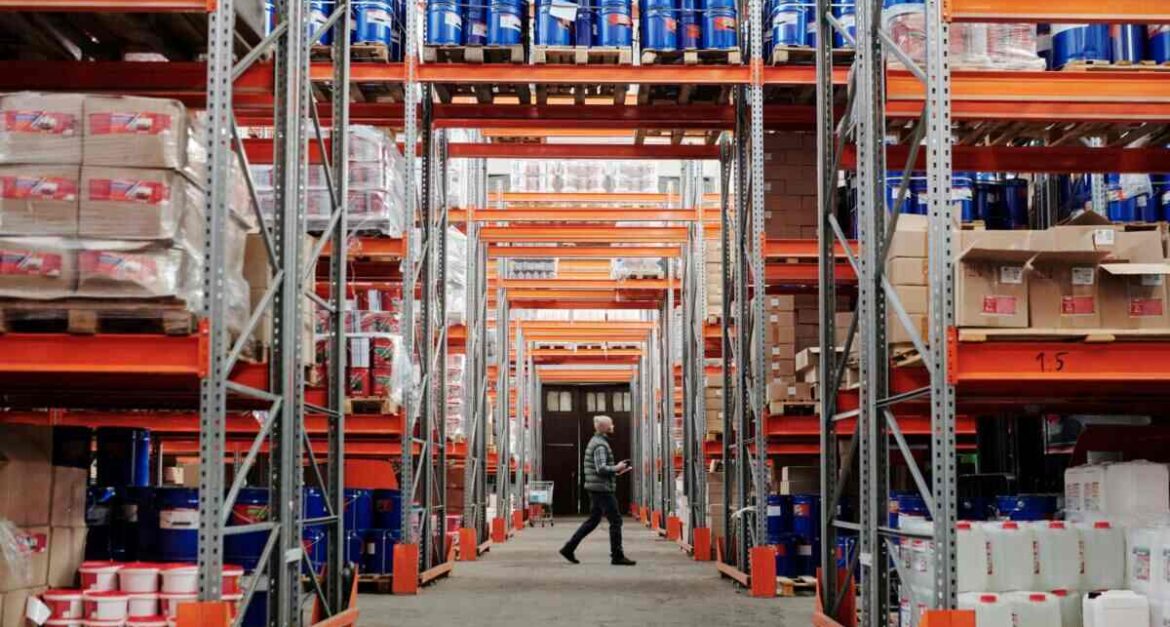
Why Warehouses Are Struggling With Speed and Accuracy Today
Every year, supply chains grow more complex. Customers expect next-day delivery. B2B clients demand predictable lead times. SKU numbers multiply, and reverse logistics add constant pressure on inventory accuracy. As a result, many warehouses face slow processing speeds, recurring errors, inventory mismatches, and delayed fulfillment—issues that become expensive and reputation-damaging in competitive markets like Saudi Arabia and the GCC.
The core problem isn’t labor shortage or equipment cost. It’s inefficiency. Warehouses lose hours every day to unnecessary travel time, manual data entry, outdated layouts, poor inventory visibility, and reactive planning instead of proactive optimization. These issues build up silently until they create operational bottlenecks.
The solution is a strategic one. By using proven warehouse optimization techniques, businesses can dramatically increase throughput, reduce human error, and stabilize their supply chain performance. When supported by the right technology and logistics partner—such as Palm Horizon KSA—organizations unlock smoother, faster, and more resilient warehouse operations.
What Warehouse Optimization Really Means in Modern Logistics
Warehouse optimization is the end-to-end improvement of all warehouse functions, blending process engineering, layout design, automation, human productivity, and real-time visibility into a unified system. It is not a single upgrade—it is a structured, ongoing approach that improves how goods are stored, moved, tracked, picked, and shipped.
True optimization includes:
- Maximizing usable space without overcrowding
- Reducing travel distance and unnecessary steps
- Enhancing accuracy in picking, packing, and dispatch
- Creating a stable workflow that eliminates uncertainty
- Using technology for real-time decision-making
- Minimizing human error through automation
- Preventing bottlenecks before they begin
- Improving service levels while lowering costs
Optimized warehouses don’t just move goods; they operate as predictable, synchronized systems that deliver consistent performance even under pressure.
Core Attributes of Efficient, High-Performance Warehouses
Successful warehouse optimization is built on a few essential pillars that determine how efficiently, accurately, and consistently a warehouse can operate. These core elements strengthen performance, enhance user value, and ensure every process aligns with real operational needs.
1. Real-Time Inventory Visibility
Warehouses need instant access to stock levels, SKU locations, order statuses, and replenishment needs. Tools like WMS, RFID, and barcode systems prevent blind spots that cause slowdowns and errors.
2. Predictable Process Flows
Standard operating procedures, repeatable workflows, and automated tasks reduce operational variability and keep cycles stable.
3. Space and Layout Optimization
Efficient storage systems, correctly measured aisle widths, and selective pallet racking reduce congestion and improve smooth movement.
4. Automation as a Support System
Automation doesn’t replace the workforce; it augments it. Automated labeling, scanning, routing, and replenishment improve reliability while speeding up repetitive tasks.
5. Data-Driven Operational Intelligence
Historical and real-time data guide replenishment, labor planning, inventory allocation, seasonal adjustments, and predictive maintenance.
Together, these attributes form the backbone of sustainable warehouse optimization.
The 10 Warehouse Optimization Techniques That Improve Speed & Reduce Errors
Below are the most powerful, widely used optimization techniques implemented across global supply chains today. Each technique is explained with benefits, use cases, and practical applications.
1. Slotting Optimization: Positioning Items for Maximum Efficiency
Slotting optimization evaluates SKU velocity, demand patterns, product size, pick frequency, and order composition before assigning ideal locations in the warehouse.
High-demand SKUs are kept close to picking zones. Heavy items are placed in lower racks. Frequently paired items are stored side by side.
Benefits of slotting optimization include:
- Reduced walking distance
- Less physical strain on workers
- Faster order picking cycles
- More predictable replenishment timing
- Better use of vertical and horizontal space
Industries like FMCG, retail, pharmaceuticals, and electronics see the strongest gains because of fast-moving SKUs.
2. ABC Inventory Analysis for Smarter Organization
ABC analysis categorizes inventory based on consumption value.
- A-items: High value, high frequency
- B-items: Moderate value
- C-items: Low value, low frequency
This classification supports smarter stocking strategies. A-items are positioned closest to picking zones, while C-items are placed in less prime locations.
Benefits:
- Reduced congestion
- Better restocking efficiency
- Improved picking accuracy
- More organized replenishment cycles
ABC analysis is particularly beneficial for e-commerce, wholesale distribution, and automotive parts supply chains.
3. Cross-Docking to Eliminate Storage Delays
Cross-docking reduces storage time by moving inbound goods directly to outbound docks. Instead of shelving items, warehouse teams route them immediately toward the next stage of distribution.
Advantages include:
- Faster turnaround
- Lower storage costs
- Reduced handling steps
- Improved freshness for perishables
Retailers, supermarkets, and cold chain logistics companies use cross-docking to maintain speed and quality.
4. WMS Automation to Standardize and Accelerate Operations
A Warehouse Management System automates workflows that typically require manual oversight. It provides real-time instructions, digital picking paths, inventory tracking, and automated alerts.
Main WMS features:
- Guided picking routes
- Automated replenishment
- Digital cycle counting
- Real-time dashboards
- Dock and labor scheduling
Automation reduces errors significantly while improving predictability.
5. Barcode and RFID Tracking for Error-Free Identification
Barcode scanning is the most widely used tool for fast, error-free data capture. RFID adds even more automation by enabling batch scanning without line of sight.
Impact:
- Eliminates manual entry
- Reduces mis-labeling
- Speeds up inbound and outbound processing
- Improves cycle count accuracy
Industries with high SKU diversity—like ecommerce—see the strongest improvements.
6. Warehouse Layout Redesign for Faster Movement
Many warehouses lose hours each day due to inefficient physical layouts. Redesigning the layout can transform performance.
Enhancements include:
- Wider aisles for fast movement
- Dedicated receiving and staging areas
- Zoning based on SKU type
- Racking systems designed around product size and turnover
A redesigned layout reduces congestion, improves safety, and increases speed.
7. Pick Path Optimization to Reduce Walking Distance
Optimizing the picking path uses data analytics to identify the shortest, most efficient routes. It eliminates zig-zag walking, backtracking, and unnecessary stops.
Benefits:
- Shorter picking cycles
- Reduced fatigue
- Higher productivity per shift
- Better order batching efficiency
Fulfillment centers with high daily order volumes benefit the most.
8. Continuous Cycle Counting for Accurate Inventory
Cycle counting spreads inventory checks throughout the year, avoiding full shutdowns.
Advantages:
- Consistent inventory accuracy
- Early detection of shrinkage
- Smoother replenishment
- Lower risk of stockouts
Industries managing thousands of SKUs use continuous cycle counting to maintain accuracy throughout the year.
9. Optimized Dock Scheduling to Eliminate Bottlenecks
Inbound and outbound congestion at loading docks creates delays throughout the warehouse. Dock scheduling tools balance truck arrivals, prevent bottlenecks, and ensure smoother flow.
Improves:
- Yard management
- Unloading/loading time
- Resource assignment
- Peak hour planning
This technique is critical for distribution centers handling multi-carrier shipments.
10. Real-Time Tracking and IoT Sensors for Predictability
IoT devices monitor product conditions, equipment movement, and real-time performance metrics. Connected sensors help maintain visibility across:
- Frozen cargo
- Medicine and temperature-sensitive items
- High-value SKUs
- Moving equipment such as forklifts
IoT-driven tracking prevents errors and supports proactive problem solving.
Industries That Gain the Most from Warehouse Optimization
Warehouse optimization is beneficial across industries, but certain sectors experience the greatest impact due to high SKU volumes and fast-moving cycles:
- Ecommerce & marketplace sellers
- Retail & FMCG distribution
- Pharmaceuticals & medical supplies
- Automotive parts & industrial components
- Food and cold chain logistics
- Oil & gas supply chain
- Manufacturing and assembly operations
In Saudi Arabia, businesses in Riyadh, Dammam, and Jeddah increasingly adopt optimization techniques to support Vision 2030 goals for advanced logistics infrastructure.
Comparison: Optimized Warehouses vs. Traditional Warehouses
| Traditional Warehousing | Optimized Warehousing |
| Manual data entry | Automated scanning/RFID |
| Long walking distances | Engineered pick paths |
| Single staging zone | Dedicated inbound/outbound zones |
| Annual stock count | Continuous cycle counting |
| High error risk | Error-proof workflows |
| Reactive planning | Real-time dashboards |
| Slow dock flow | Scheduled, balanced docks |
| Limited visibility | Full live tracking |
Modern logistics providers like Palm Horizon KSA outperform legacy competitors by implementing these optimization techniques across their operational ecosystem: warehousing, distribution, freight forwarding, and last-mile delivery.
Implementation Guide: How to Execute Warehouse Optimization Step-by-Step
1. Conduct a Full Warehouse Assessment
Map out:
- SKU movement
- Velocity profiles
- Storage utilization
- Travel paths
- Picking cycles
- Equipment limitations
This forms the baseline for all improvements.
2. Redesign Layout and Slotting Based on Data
Classify inventory using:
- ABC analysis
- Velocity grouping
- Seasonality
- Order composition patterns
Then re-slot SKUs to match demand behavior.
3. Implement Technology Gradually
Start with:
- WMS
- Barcode scanners
- Digital dashboards
- Dock scheduling tools
Later, integrate RFID or IoT sensors.
4. Standardize Workflows
Create SOPs for:
- Picking
- Receiving
- Put-away
- Replenishment
- Dispatch
- Returns Handling
Train staff and enforce consistency.
5. Optimize Labor Management
Use historical data to:
- Predict peak hours
- Build balanced shifts
- Assign work based on travel distance and skill levels
6. Monitor KPIs Continuously
Track metrics such as:
- Order accuracy
- Pick rate per hour
- Put-away time
- Dock cycle time
- Inventory accuracy
- On-time dispatch rate
Optimization succeeds when data drives every decision.
FAQ Section
1. How do warehouse optimization techniques reduce labor costs?
Optimized layouts, slotting improvements, and automated workflows reduce walking distance, manual entry, and repeated tasks—allowing fewer workers to handle more volume without burnout.
2. What is the fastest way to improve picking speed?
Pick path optimization combined with ABC/velocity-based slotting produces the fastest improvement because it cuts unnecessary movement instantly.
3. Is warehouse optimization expensive to implement?
Many improvements—like reorganizing the layout, updating SOPs, and applying ABC analysis—cost little to implement but produce significant performance gains.
4. How does real-time visibility improve accuracy?
Tools like WMS, scanners, and sensors prevent mistakes by keeping inventory data updated the moment an item moves, eliminating manual errors and mismatches.
5. Which industries require the most accurate warehouse operations?
Pharmaceuticals, ecommerce, FMCG, automotive, and cold chain logistics depend heavily on accuracy due to product sensitivity and high-order volumes.
Conclusion: Build a Faster, Smarter, Error-Free Warehouse for 2025 and Beyond
Warehouse optimization is not a quick fix; it is a continuous operational discipline that strengthens speed, accuracy, and overall warehouse performance. As supply chains shift and customer expectations become more demanding, the ability to maintain a well-organized, data-driven warehouse turns into a genuine competitive advantage. When businesses adopt proven methods such as strategic slotting, WMS automation, ABC classification, real-time visibility tools, and optimized pick paths, they begin to see measurable improvements—faster order processing, more reliable inventory data, smoother workflows, and a more resilient supply chain.
In markets like Saudi Arabia, where logistics has become a cornerstone of national growth, companies benefit even more from partnering with a provider that understands both the operational challenges and the regional landscape. This is why many organizations turn to trusted logistics partners like Palm Horizon KSA, whose warehousing and distribution capabilities help brands move goods efficiently, maintain accuracy, and scale confidently. By integrating the right systems and support, businesses can turn their warehouse from a daily challenge into a strong operational advantage