

The System Logic Redefining Trade Execution in the Kingdom
Arrival Is No Longer the Moment of Truth
Are you unwillingly paying the concealed cost of low-cost courier services?
When the customers want their deliveries to be timely, businesses usually fall into the trap of selecting couriers and basing their choice on price alone. It would appear that low rates are an intelligent choice at first sight, not to mention that everybody would like to save money. Reality is however, much more costly than it looks. Late deliveries, broken packages, overload, and angry customers silently accumulate in mistrust toward your brand and act as a strain on your business. Most of the companies are not aware of the actual impact until it begins to hurt their bottom line and image.
It is in the collaboration with trusted couriers who will view logistics as a strategic operation and not a transactional service. When collaborating with professional courier logistics services, the companies obtain consistent performance, correct courier picking and delivery, and professional box truck courier service, which is safe and efficient and timely. Such companies as Palm Horizon are a good example of this strategy as it provides the reliability of operations decreasing any internal inefficiencies, establishing long-term trust with customers, and making the decision to rely on reliability instead of the lowest price an intelligent investment in the future.
Compliance as a Precondition, Not a Corrective Action
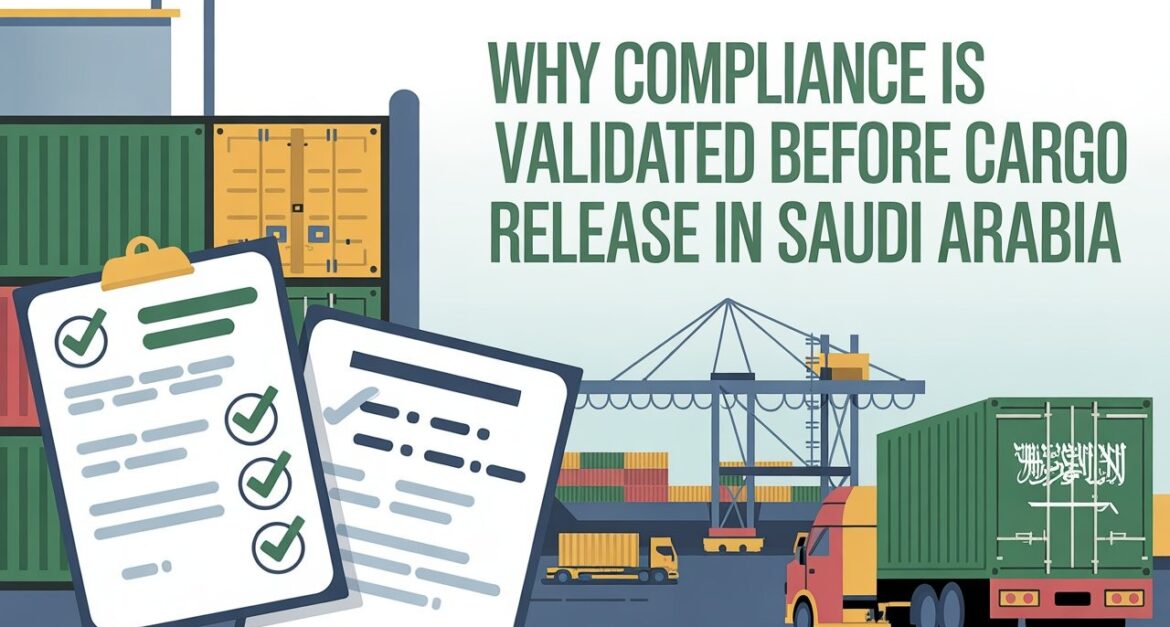
Saudi customs treats compliance as a precondition for movement, not a corrective step. This philosophy differs fundamentally from markets where cargo physically enters first and regulatory issues are resolved later.
In Saudi Arabia, customs systems determine whether cargo qualifies for release before movement occurs. If the system cannot validate eligibility, the cargo does not progress — regardless of arrival time, commercial urgency, or contractual pressure.
This model eliminates ambiguity. It ensures that only shipments aligned with legal, fiscal, and regulatory requirements move into domestic circulation. Compliance does not fix problems after arrival. It determines whether arrival even matters.
Why Saudi Arabia Rejected Post-Arrival Negotiation Models
Historically, many customs environments allowed flexibility after arrival. Officers reviewed documents manually, requested clarifications, and approved amendments with limited disruption. Saudi Arabia deliberately moved away from this model.
The Kingdom’s trade modernization strategy prioritizes:
- Regulatory certainty
- Digital governance
- Risk prevention over correction
- System accountability
Post-arrival negotiation weakens these objectives. It allows goods to reach controlled zones without confirmed eligibility and creates inconsistent enforcement outcomes. By validating compliance before release, Saudi Arabia closes this gap.
This shift reflects a strategic decision, not a bureaucratic preference.
Digital Customs Platforms as Decision Engines, Not Filing Systems
Saudi customs platforms do not store documents for later review. They operate as decision engines.
When shipment data is submitted, the system immediately:
- Validates documentation completeness
- Cross-checks HS codes against restrictions
- Verifies permit requirements
- Benchmarks declared values
- Assesses historical compliance behavior
These checks occur before release authority exists. Once initiated, the system expects data stability. It does not pause for physical arrival. It does not wait for clarification after the fact.
This explains why compliance validation happens before cargo release rather than after arrival.
Why Data Finality Matters More Than Data Presence
Many businesses assume that submitting documents is enough. In Saudi customs systems, data finality matters more than data presence.
Finality means:
- HS codes will not change
- Declared values reflect commercial reality
- Permits align with product identity
- Descriptions match regulatory classifications
Once data enters the system, it forms a compliance snapshot. Changes after submission disrupt risk models and trigger controls. This is why amendments often increase inspection probability instead of resolving issues.
The system values certainty over flexibility.
The Risk Engine Comes Before the Forklift
Saudi customs risk engines operate independently of cargo handling schedules. The system does not wait for cargo to be unloaded before assessing eligibility.
Risk profiling begins as soon as data enters the platform. By the time cargo arrives physically, the system has already formed an eligibility position. Arrival does not influence that position. Compliance does.
This sequencing explains why faster transit never compensates for inaccurate documentation.
Why Transit Speed Has Zero Influence on Clearance Outcomes
In many logistics strategies, speed dominates decision-making. Faster shipping is assumed to reduce risk. In Saudi Arabia, transit speed has no impact on clearance outcomes.
Customs systems do not evaluate urgency, service level agreements, or delivery deadlines. They evaluate:
- Accuracy
- Consistency
- Regulatory alignment
A fast shipment with inaccurate data will stall. A slower shipment with validated compliance will clear predictably. This reality forces a shift from speed-driven logistics to compliance-driven planning.
Compliance as a Supply Chain Design Constraint
Because Saudi Arabia validates compliance before cargo release, regulations become design constraints, not administrative tasks.
Effective supply chains in the Kingdom integrate compliance at the planning stage. This includes:
- Product eligibility assessment
- HS classification accuracy
- Permit readiness sequencing
- Documentation alignment across systems
When businesses ignore these constraints, customs systems enforce them automatically through holds and inspections.
Why Post-Arrival Corrections Signal Risk, Not Transparency
Many businesses view corrections as responsible behavior. Saudi customs systems interpret them differently.
Post-arrival corrections introduce instability. They suggest that the original declaration lacked certainty. From a system perspective, this increases risk exposure rather than reducing it.
As a result, amendments frequently:
- Escalate shipments to inspection
- Trigger manual review
- Extend clearance timelines
This is why Saudi Arabia limits post-submission flexibility and validates compliance upfront.
Revenue Protection and Market Integrity as Drivers
Pre-release compliance validation protects two critical national interests: revenue accuracy and market integrity.
Correct HS classification ensures accurate duty and VAT assessment. Permit validation ensures restricted or regulated goods do not enter the market without authorization. Early enforcement prevents downstream violations that are costly to correct.
By validating compliance before release, authorities reduce leakage, disputes, and enforcement escalation.
Sector Sensitivity and Early Enforcement Logic
Certain sectors face heightened scrutiny because errors carry higher consequences. Electronics, consumer goods, pharmaceuticals, cosmetics, food products, and spare parts often trigger deeper validation.
In these sectors, pre-release compliance ensures safety, conformity, and revenue protection before goods reach consumers. This explains why authorities enforce validation earlier rather than relying on post-entry controls.
Why Compliance Consistency Shapes Long-Term Risk Profiles
Saudi customs systems do not evaluate shipments in isolation. They evaluate patterns.
Consistent compliance behavior improves risk profiles over time. Frequent amendments, misclassifications, or permit issues damage credibility and increase inspection probability.
By validating compliance before release, businesses protect long-term clearance performance, not just individual shipments.
The Logistics Company as a Compliance Architect
In Saudi Arabia, a logistics company cannot function as a transport coordinator alone. It acts as a compliance architect.
Its responsibility includes:
- Structuring shipment data for system validation
- Aligning freight execution with regulatory readiness
- Ensuring data consistency across platforms
- Reducing amendment exposure before arrival
Without this role, supply chains remain reactive and unstable.
How Palm Horizon Aligns With Pre-Release Validation Logic
Palm Horizon operates within Saudi Arabia’s compliance-first framework by embedding regulatory logic into shipment planning.
Instead of correcting issues after arrival, Palm Horizon validates documentation, HS classification, permit eligibility, and data consistency before submission. Freight forwarding, customs coordination, and execution follow a single compliance-aligned workflow.
This approach reflects a clear understanding that in Saudi Arabia, eligibility precedes movement.
Why Pre-Release Validation Improves Supply Chain Predictability
When compliance is validated before cargo release, businesses gain:
- Predictable clearance timelines
- Reduced inspection exposure
- Stable inventory planning
- Lower cost volatility
Over time, this predictability becomes a competitive advantage in a compliance-driven market.
Risk Engines Are Built to Detect Inconsistency, Not Just Errors
Saudi customs risk engines do not operate on a simple right-or-wrong basis. They evaluate consistency across datasets. A shipment may appear compliant on the surface yet still trigger intervention if internal data relationships do not align.
For example, HS codes are not validated independently. They are evaluated against declared value ranges, product descriptions, country of origin patterns, historical importer behavior, and permit logic. When one variable deviates, the system flags the shipment — not because it is illegal, but because it is unreliable.
This is why compliance validation must occur before cargo release. Once cargo arrives, inconsistency already exists in the system’s assessment, and correction does not erase the initial risk signal.
Why “Almost Correct” Data Performs Worse Than Fully Accurate Data
In Saudi customs systems, “almost correct” data often performs worse than clearly incorrect data. Partial alignment creates ambiguity, and ambiguity drives enforcement.
A slightly inaccurate HS code combined with a reasonable description introduces classification doubt. A correct permit paired with a mismatched product description introduces eligibility doubt. These gray zones increase inspection probability more than obvious errors, because they suggest uncertainty rather than oversight.
Pre-release validation eliminates these gray zones by ensuring every data element supports the same regulatory interpretation before submission.
Customs Systems Prioritize Predictability Over Commercial Urgency
Commercial urgency has no operational meaning inside Saudi customs platforms. The system does not recognize stock shortages, promotional deadlines, or contractual penalties. It recognizes predictability.
Predictable shipments follow known compliance patterns. Unpredictable shipments require intervention. By validating compliance before release, authorities protect system predictability, even if it slows individual shipments.
Businesses that attempt to override this logic with urgency signals consistently fail.
Why Amendments Trigger Deeper Scrutiny Instead of Resolution
Many traders assume amendments demonstrate transparency. From a systems perspective, amendments signal data instability.
When shipment data changes after submission, the system must reassess risk. That reassessment often expands scope rather than narrowing it. Each amendment introduces new validation loops, cross-checks, and risk comparisons.
This is why limited corrections may be processed, but they rarely simplify clearance. They reset the risk clock instead of clearing it.
The Structural Difference Between Correction and Prevention
Correction is reactive. Prevention is structural.
Saudi Arabia’s customs framework favors prevention because it reduces enforcement cost, market disruption, and legal escalation. Pre-release validation prevents non-compliant goods from entering circulation rather than correcting violations after the fact.
This structural preference explains why compliance planning matters more than document fixing.
Why HS Code Accuracy Sits at the Core of the System
HS classification in Saudi Arabia functions as a regulatory trigger, not just a tariff identifier.
The HS code determines:
- Permit requirements
- Authority involvement
- Inspection eligibility
- Duty and VAT treatment
- Product restrictions
An incorrect code does not just misprice the shipment. It misroutes the entire compliance pathway. Correcting it after arrival forces the system to re-evaluate every downstream decision, which rarely happens without friction.
Value Declaration as a Risk Multiplier
Declared value operates as a risk multiplier inside Saudi customs systems. It interacts directly with HS classification, invoice credibility, and market benchmarks.
When value appears inconsistent with product identity or historical patterns, it raises suspicion regardless of documentation completeness. Post-arrival value corrections intensify this suspicion because they imply initial misrepresentation.
Pre-release validation ensures value aligns with classification, market norms, and commercial logic before risk engines activate.
Why Physical Inspection Is a System Failure, Not a Routine Step
Contrary to popular belief, inspections are not routine in Saudi Arabia. They represent system uncertainty.
When digital validation cannot confirm compliance with confidence, physical inspection becomes necessary. This is why inspections increase after amendments or inconsistencies.
By validating compliance before cargo release, businesses reduce inspection probability and protect operational flow.
Compliance Timing Shapes Inventory Strategy
Because Saudi Arabia validates compliance before release, inventory strategies must adapt.
Just-in-time models that rely on post-arrival flexibility perform poorly. Buffer planning, permit sequencing, and documentation readiness must precede shipment execution.
Companies that redesign inventory strategy around compliance timing gain stability, while those that ignore it face recurring disruption.
Why Integrated Data Matters More Than Individual Documents
Individual documents do not clear shipments. Integrated data does.
Shipment data must remain consistent across:
- Carrier systems
- Customs platforms
- Regulatory portals
- Commercial documentation
When discrepancies appear between systems, risk engines escalate review. This is why shipment data consistency must be engineered before submission, not corrected afterward.
Compliance as a Reputation System
Saudi customs platforms accumulate behavioral history. Each shipment contributes to a compliance reputation.
Repeated amendments, inconsistent declarations, or misclassifications weaken that reputation. Over time, this results in higher inspection rates and slower clearance — even when future shipments appear correct.
Pre-release validation protects not just the current shipment, but future operational performance.
The Strategic Role of Palm Horizon in Compliance-First Logistics
Palm Horizon operates with a clear understanding that Saudi Arabia’s customs system rewards preparation, consistency, and certainty.
Rather than reacting at ports, Palm Horizon aligns freight forwarding, documentation, and customs coordination into a single compliance-driven workflow. Shipment data is stabilized before submission. Regulatory logic guides execution decisions. Amendments become exceptions, not norms.
This approach directly aligns with Saudi Arabia’s pre-release validation model.
Why Compliance Maturity Beats Speed at Scale
Speed creates short-term wins. Compliance maturity creates long-term scalability.
As shipment volumes grow, correction-based models collapse under their own weight. Compliance-first models scale predictably because they reduce exception handling, inspection frequency, and administrative noise.
In Saudi Arabia, maturity always outperforms urgency.
The Long-Term Direction of Saudi Trade Enforcement
Saudi Arabia’s trade environment is moving toward greater automation, deeper data integration, and stricter pre-release validation.
Flexibility will decrease, not increase. Systems will become faster at detecting inconsistency, not more forgiving. Businesses that align early will thrive. Those that rely on post-arrival fixes will struggle.
Final Perspective: Release Is Earned Before Arrival
In Saudi Arabia, cargo does not earn release by arriving on time. It earns release by qualifying early.
Customs systems validate compliance before release because the framework exists to prevent risk, not to manage it after entry. Accuracy outweighs speed. Eligibility overrides arrival. Once data enters the system, certainty matters more than correction.
This model reshapes how supply chains must be designed. Businesses that understand this logic plan shipments around regulatory readiness, not transport milestones alone. They treat documentation, classification, permits, and data integrity as clearance prerequisites—not administrative afterthoughts.
Partners like Palm Horizon convert this system reality into operational advantage. By embedding compliance into freight planning, documentation workflows, and execution logic, Palm Horizon helps businesses avoid post-arrival disruption, reduce inspection exposure, and maintain predictable cargo flow in a compliance-driven market.