

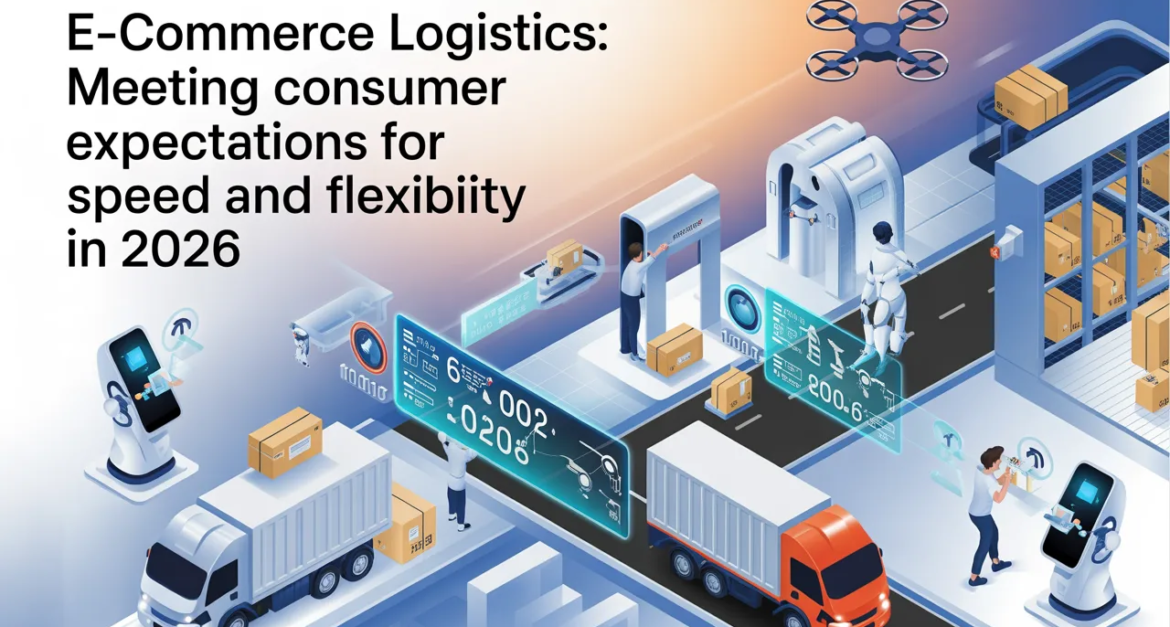
Are you struggling to keep up with customers who expect same-day delivery, real-time tracking, and effortless returns? In today’s digital marketplace, slow fulfillment and rigid logistics systems don’t just delay orders — they damage trust, reduce repeat purchases, and quietly erode brand value.
The solution is not simply faster shipping. The real answer lies in building a structured, technology-driven, and scalable e-commerce logistics system that balances speed with flexibility. Businesses that treat logistics as strategic infrastructure — rather than a backend expense — consistently outperform their competitors.
Across markets like Saudi Arabia, e-commerce growth is accelerating rapidly. Consumers are digitally sophisticated, competition is intense, and expectations are higher than ever. To win in this environment, companies need a logistics partner that understands performance, visibility, and operational precision.
This comprehensive guide explores how modern e-commerce logistics works, why speed and flexibility matter more than ever, and how the right logistics strategy can position your business for long-term success.
The Evolution of E-Commerce Logistics
A decade ago, customers were satisfied with 3–5 day delivery windows. Today, that timeline feels outdated. Global platforms have redefined expectations, and local businesses must now operate at similar standards to remain competitive.
E-commerce logistics has evolved from basic shipping coordination into an integrated system that includes:
- Intelligent warehousing
- Automated order processing
- Multi-channel inventory management
- Real-time shipment visibility
- Last-mile optimization
- Reverse logistics management
This shift has turned logistics into a primary driver of customer experience.
Speed alone is no longer a differentiator — it is the baseline.
Why Speed Is Non-Negotiable in Modern E-Commerce
Delivery speed directly influences purchasing behavior. Studies consistently show that long shipping times increase cart abandonment rates. Customers equate fast delivery with professionalism, reliability, and competence.
However, delivering quickly without operational discipline leads to higher costs and increased errors.
True logistics excellence requires structured execution:
1. Smart Inventory Positioning
Inventory must be strategically distributed across fulfillment centers to reduce transit time.
2. Automated Order Processing
Automation eliminates manual delays and reduces picking errors.
3. Real-Time Visibility
Shipment tracking builds customer confidence and reduces support inquiries.
4. Data-Driven Forecasting
Accurate demand forecasting prevents stockouts and overstocking.
When these systems function together, businesses achieve both speed and stability.
Flexibility: The Real Competitive Advantage
If speed wins attention, flexibility wins loyalty.
Customers want control over their orders. They expect:
- Choice of delivery windows
- Address modification options
- Real-time tracking updates
- Easy returns
- Multiple payment and shipping options
Rigid logistics systems cannot support this level of responsiveness.
Flexible logistics service models include:
- Express and standard shipping options
- Scheduled delivery
- Click-and-collect systems
- Reverse logistics integration
- Omnichannel fulfillment support
Businesses that engineer flexibility into their supply chain gain a long-term competitive edge.
Warehousing: The Engine Behind Fast Fulfillment
Warehousing is no longer just storage. It is a performance hub.
Modern warehouses operate as intelligent fulfillment centers powered by digital systems and automation.
In major commercial hubs like Riyadh, warehouse placement significantly influences last-mile efficiency and delivery speed.
Advanced warehousing includes:
- Barcode and RFID inventory control
- Automated picking systems
- Real-time stock monitoring
- Integrated warehouse management systems (WMS)
- Demand-based inventory replenishment
When warehousing operates with precision, order accuracy increases, returns decrease, and fulfillment speed improves dramatically.
The Role of Technology in E-Commerce Logistics
Technology is the backbone of modern logistics.
Companies investing in AI, automation, and data analytics are outperforming traditional operators.
Key innovations shaping e-commerce logistics in 2026 include:
AI-Based Demand Forecasting
Artificial intelligence analyzes purchasing trends, seasonal demand, and market fluctuations to optimize inventory planning.
Robotics in Warehousing
Automated systems reduce picking time and minimize human error.
Cloud-Based Tracking Platforms
Customers can track shipments in real time, improving transparency.
Route Optimization Software
Delivery routes are dynamically adjusted to avoid traffic delays and reduce fuel costs.
Predictive Risk Management
Analytics tools anticipate disruptions before they impact operations.
Technology transforms logistics from reactive problem-solving into proactive performance engineering.
Last-Mile Delivery: Where Customer Experience Is Defined
The last mile is often the most expensive and operationally complex stage of logistics.
It is also the most visible.
Late deliveries, poor communication, and failed drop-offs directly impact brand perception.
Successful last-mile strategies include:
- Real-time driver tracking
- SMS delivery notifications
- Contactless delivery options
- Delivery time-slot selection
- Smart route planning
When last-mile operations are optimized, businesses reduce delivery costs while improving customer satisfaction.
Reverse Logistics: Turning Returns into Opportunities
E-commerce naturally produces higher return rates compared to physical retail.
Poorly managed returns create operational strain and financial loss. Efficient reverse logistics systems, however, can strengthen customer loyalty.
An effective reverse logistics system includes:
- Simple return initiation processes
- Prepaid return labels
- Rapid product inspection
- Fast refunds or exchanges
- Restocking efficiency
Customers are more likely to purchase again when returns are seamless and transparent.
Cross-Border E-Commerce Logistics
With digital marketplaces expanding, many businesses now sell beyond national borders.
Cross-border logistics introduces complexity:
- Customs clearance procedures
- Documentation compliance
- International shipping regulations
- Variable transit times
- Currency and tax considerations
An experienced logistics company ensures smooth cross-border operations, preventing costly delays and regulatory complications.
For businesses operating within or expanding into the Kingdom, working with a trusted ksa logistics company becomes essential.
Scalability: Preparing for Peak Demand
E-commerce demand fluctuates rapidly due to promotions, holidays, and seasonal campaigns.
A fragile logistics system collapses under sudden spikes in order volume.
Scalable logistics infrastructure includes:
- Expandable warehouse capacity
- Flexible labor allocation
- Transportation network adaptability
- Backup carrier partnerships
- Contingency planning
Businesses must plan for growth before it happens — not after systems fail.
The Financial Impact of Efficient E-Commerce Logistics
Many companies view logistics purely as an expense. Experienced operators understand it as a margin-protection tool.
Efficient logistics reduces:
- Emergency shipping costs
- Inventory holding costs
- Lost sales due to stockouts
- Customer service overhead
- Product damage claims
Well-structured logistics service systems directly improve profitability.
When fulfillment is precise, returns decrease, repeat purchases increase, and operational waste declines.
Choosing the Right Logistics Partner
Selecting the right logistics company determines long-term operational success.
An ideal partner provides:
- End-to-end logistics services
- Warehousing and distribution
- Transportation coordination
- Customs clearance support
- Real-time shipment visibility
- Performance accountability
The difference between an average provider and the best logistic company in ksa lies in structured systems, transparency, and execution discipline.
For businesses seeking reliable, scalable, and technology-driven logistics support, partnering with the best ksa logistics company can redefine operational performance.
At Palm Horizon, e-commerce logistics is engineered with precision and accountability. From warehousing and fulfillment to transportation and supply chain coordination, solutions are structured to meet modern consumer expectations.
Businesses looking for a professional logistics partner can explore comprehensive services at best ksa logistics company.
Building a Future-Ready E-Commerce Supply Chain
To remain competitive in 2026 and beyond, companies must adopt a proactive mindset.
Future-ready logistics systems are:
- Digitally integrated
- Data-driven
- Scalable
- Customer-focused
- Environmentally conscious
Sustainability is also becoming a major factor in purchasing decisions. Eco-friendly packaging, fuel-efficient delivery routes, and optimized load planning reduce environmental impact while improving cost efficiency.
Businesses that combine performance with responsibility strengthen brand reputation.
Common Mistakes E-Commerce Businesses Make
Even growing brands often fall into avoidable logistics traps:
- Treating logistics as a secondary function
- Delaying investment in technology
- Underestimating warehouse location strategy
- Ignoring reverse logistics planning
- Choosing providers based solely on price
Short-term cost savings often create long-term operational inefficiencies.
Strategic investment in professional logistics infrastructure produces sustainable growth.
The Strategic Role of a KSA Logistics Company
Operating in Saudi Arabia presents unique opportunities and challenges. Regulatory standards, customs processes, infrastructure expansion, and digital transformation initiatives are reshaping the logistics landscape.
A professional ksa logistics company understands:
- Regional trade routes
- Port and airport coordination
- Local transportation networks
- Regulatory compliance standards
- Market-specific demand patterns
Local expertise combined with international standards ensures smooth operations and long-term scalability.
Conclusion: Logistics as a Growth Engine
E-commerce logistics is no longer a background function quietly moving parcels behind the scenes. It has become a strategic growth engine that directly influences customer perception, profitability, and long-term scalability. Speed builds trust because customers associate fast delivery with professionalism and reliability. Flexibility builds loyalty by giving buyers control over delivery times, tracking visibility, and hassle-free returns. Precision builds reputation, ensuring that the right product reaches the right customer at the right time without errors. Businesses that design logistics systems with structure, technology integration, and forward planning create a sustainable competitive advantage that competitors struggle to replicate.
In today’s marketplace, where consumers expect immediate fulfillment and seamless return processes, operational excellence defines brand value more than marketing promises. Companies that invest in professional logistics service infrastructure — supported by advanced technology, transparent communication, and disciplined execution — position themselves for stable and consistent growth. Structured warehousing, intelligent inventory management, optimized transportation, and real-time shipment visibility reduce risk while enhancing customer satisfaction. With strategic execution and industry expertise, Palm Horizon supports businesses in transforming logistics into a powerful engine for efficiency, scalability, and long-term market leadership.
FAQs
1. What is e-commerce logistics?
E-commerce logistics covers warehousing, inventory management, order fulfillment, shipping, tracking, and returns handling for online businesses. It ensures products move efficiently from storage to the customer’s doorstep with speed and accuracy.
2. Why is speed important in e-commerce?
Fast delivery increases customer satisfaction, reduces cart abandonment, and strengthens brand trust. In competitive online markets, quick fulfillment directly influences repeat purchases.
3. How does flexible delivery improve customer retention?
Flexible delivery options—such as time-slot selection, address changes, and easy returns—give customers control and convenience, which builds loyalty and long-term trust.
4. What technologies improve e-commerce logistics?
AI forecasting, warehouse automation, real-time tracking systems, and route optimization software improve accuracy, reduce delays, and enhance operational efficiency.
5. Why is choosing the right logistics company important?
A professional logistics company ensures reliable delivery, scalable infrastructure, cost control, and smooth operations—supporting consistent business growth.
6. What is last-mile delivery?
Last-mile delivery is the final step of shipping, where goods reach the customer. It is critical because it directly impacts customer experience and satisfaction.
7. What is reverse logistics?
Reverse logistics manages returns, exchanges, and refunds efficiently, helping maintain customer confidence and brand reputation.