

Introduction: Compliance Is No Longer a Back-Office Function
In Saudi Arabia’s logistics environment, compliance is no longer limited to paperwork, customs forms, or regulatory checklists. It has become a core operational function that directly affects delivery timelines, cost control, and business credibility. As trade volumes grow and regulations tighten, logistics compliance failures no longer cause isolated delays — they create systemic risk.
Many logistics disruptions in the Kingdom do not happen because regulations are unclear. They happen because logistics operations are fragmented. When transportation, warehousing, documentation, and customs handling operate in silos, compliance gaps quietly emerge. These gaps often surface only when shipments are already delayed, inspected, or penalized.
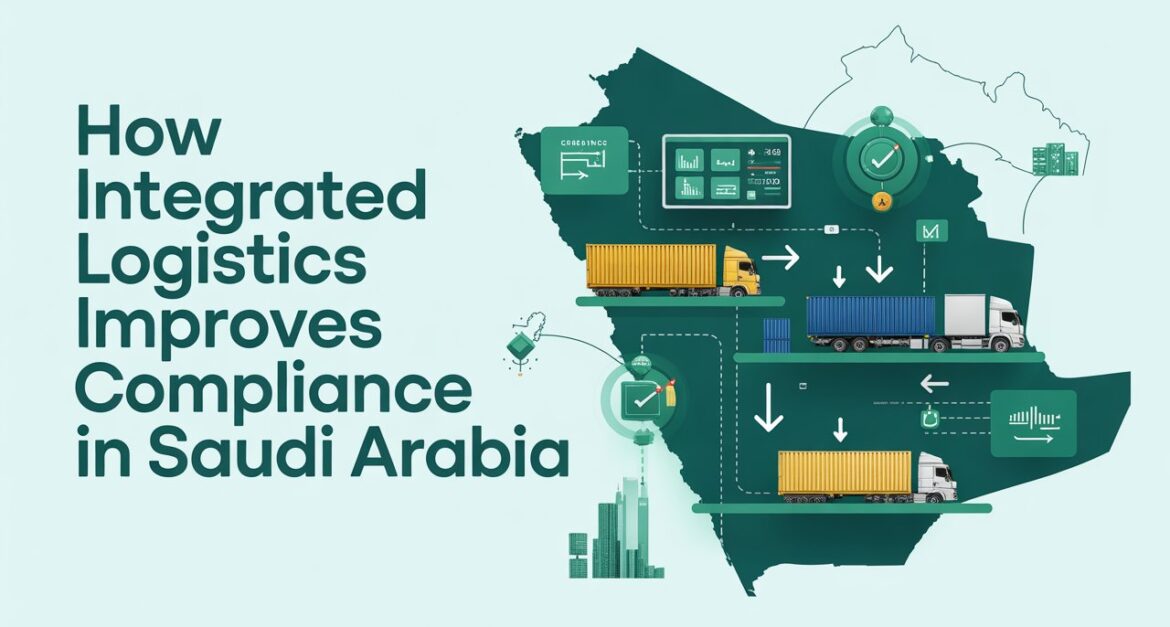
Integrated logistics changes this dynamic. By connecting every operational layer into a unified system, integrated logistics improves compliance not reactively, but structurally. This article explains how integrated logistics directly strengthens compliance in Saudi Arabia, why fragmentation increases regulatory risk, and why integration is becoming essential for businesses operating at scale.
Understanding Logistics Compliance in Saudi Arabia
Saudi Arabia maintains one of the most structured regulatory environments in the region. Compliance requirements are designed to protect national security, public safety, trade integrity, and economic stability. For businesses, this means logistics compliance extends far beyond customs declarations.
Key Areas of Logistics Compliance in KSA
- Import and export regulations
- Customs documentation accuracy
- HS code classification
- Product conformity and certification
- Transport safety regulations
- Warehouse licensing and controls
- Data accuracy in government platforms
- Audit readiness and traceability
Each of these areas touches multiple operational functions. When those functions are disconnected, compliance risk increases exponentially.
The Compliance Problem: Fragmented Logistics Operations
What Fragmentation Looks Like
In fragmented logistics models:
- Transport is managed separately from documentation
- Warehouses operate independently from customs teams
- Compliance checks happen after execution
- Data is duplicated across systems
- Visibility is partial or delayed
This structure creates blind spots. A document error may go unnoticed until customs inspection. A classification issue may be discovered only after arrival. A missing certificate may delay clearance for days.
Why Fragmentation Increases Risk
Compliance failures rarely result from a single mistake. They result from misalignment between teams, systems, and timelines. Fragmentation prevents early detection and correction.
In Saudi Arabia’s regulatory environment, making late corrections is costly. Once companies submit data to customs systems, they face limited options, formal procedures, inspections, or re-submissions. Integrated logistics helps companies prevent these issues before they occur.
What Integrated Logistics Actually Means
Integrated logistics is not simply offering multiple services under one brand. It is a coordinated operational model where:
- Transportation, warehousing, customs, and documentation share data
- Compliance checks are embedded into workflows
- Decisions are made with full operational context
- Visibility exists across the entire supply chain
Integration ensures that compliance is not treated as a final checkpoint, but as a continuous control mechanism.
How Integrated Logistics Improves Compliance: Core Mechanisms
1. Centralized Data and Documentation Control
The Compliance Risk
When documents are prepared across multiple teams or systems, inconsistencies emerge:
- Invoice values don’t match declarations
- HS codes differ between documents
- Missing or outdated certificates go unnoticed
How Integration Solves It
Integrated logistics centralizes documentation and data management. All shipment data is validated across systems before submission. This allows:
- Early detection of discrepancies
- Single source of truth for regulatory data
- Consistent declarations across platforms
For Saudi Arabia’s customs systems, accuracy at submission is critical. Centralized control dramatically reduces rejection and inspection rates.
2. Embedded Compliance Checks Across Operations
The Compliance Risk
In fragmented models, compliance checks happen late — often after cargo has moved or arrived.
How Integration Solves It
Integrated logistics embeds compliance checks at every stage:
- Pre-shipment documentation review
- Classification validation during planning
- Permit and certificate checks before dispatch
- Regulatory alignment before customs submission
This proactive structure prevents issues instead of reacting to them.
3. Improved HS Code Classification and Trade Accuracy
Why HS Codes Matter in KSA
HS code accuracy directly impacts:
- Duty and tax calculations
- Inspection probability
- Clearance timelines
- Legal liability
Misclassification is one of the most common compliance failures in Saudi Arabia.
Integrated Advantage
When logistics planning, documentation, and customs handling are aligned, HS codes are:
- Verified early
- Applied consistently
- Reviewed within operational context
This reduces disputes, penalties, and clearance delays.
4. Stronger Customs Clearance Control
The Problem with Disconnected Clearance
When customs brokers operate separately from logistics planners:
- Shipment context is missing
- Documentation intent is unclear
- Corrections take longer
Integrated Clearance Benefits
Integrated logistics ensures customs teams have:
- Full shipment visibility
- Access to supporting documentation
- Operational context for declarations
This leads to faster resolution, fewer inspections, and more predictable clearance outcomes.
5. Better Audit Readiness and Traceability
Why Audit Readiness Matters
Saudi regulatory authorities maintain the right to audit logistics records. Poor traceability exposes businesses to retroactive penalties.
Integrated Systems Improve Traceability
Integrated logistics creates:
- Clear audit trails
- Consistent data records
- Document history visibility
- Shipment-level traceability
This protects businesses long after delivery is completed.
6. Reduced Risk in Warehousing and Distribution Compliance
Warehouse Compliance in Saudi Arabia
Warehousing compliance includes:
- Licensing requirements
- Inventory controls
- Product handling regulations
- Safety standards
Integrated Advantage
When warehousing is integrated with logistics operations:
- Inventory movements are tracked accurately
- Regulated goods are controlled properly
- Compliance reporting is maintained consistently
This is critical for businesses handling high-value, regulated, or sensitive cargo.
7. Alignment with Vision 2030 Compliance Expectations
Saudi Vision 2030 is not only about growth — it is about governance, transparency, and operational discipline.
Integrated logistics supports these goals by:
- Improving data accuracy
- Reducing regulatory friction
- Enhancing trade reliability
- Supporting digital transformation initiatives
Companies aligned with integrated models are better positioned to meet evolving regulatory expectations.
Why Integrated Logistics Matters for Businesses Operating at Scale
For manufacturers, traders, project operators, and distributors, compliance failures are not isolated events. They directly affect:
- Customer trust
- Contract performance
- Financial forecasting
- Brand reputation
Integrated logistics transforms compliance from a risk factor into a competitive advantage.
Choosing the Right Integrated Logistics Partner
Not all logistics providers offer true integration. Businesses should look for partners that demonstrate:
- Operational coordination across services
- Strong compliance expertise in Saudi Arabia
- Data-driven execution
- Proven experience with regulated cargo
This integrated approach is reflected in how Palm Horizon structures its logistics operations, aligning transportation, warehousing, customs, and documentation within a controlled, compliance-focused framework built for Saudi Arabia’s regulatory environment.
The Future of Compliance in Saudi Logistics
As Saudi Arabia’s logistics ecosystem grows:
- Regulations will become more data-driven
- Compliance standards will tighten
- Visibility requirements will increase
Integrated logistics will move from advantage to necessity.
Frequently Asked Questions (FAQs)
What is integrated logistics?
Integrated logistics brings transportation, warehousing, customs clearance, documentation, and compliance into one connected operational framework, improving visibility, control, and regulatory accuracy.
Why is compliance critical in Saudi Arabia’s logistics sector?
Saudi Arabia has a highly structured regulatory environment governing imports, exports, transportation, and warehousing. Non-compliance can result in shipment delays, inspections, penalties, or clearance rejections, making compliance essential for operational stability.
How does integrated logistics improve compliance?
Integrated logistics improves compliance by aligning data, documentation, and operational workflows. It reduces errors, ensures consistency across declarations, strengthens audit trails, and enables early identification of regulatory risks.
What compliance risks are caused by fragmented logistics operations?
Fragmented operations create data mismatches, delayed documentation checks, incorrect classifications, and limited visibility. These gaps often lead to customs inspections, clearance delays, and regulatory penalties.
Does integrated logistics reduce customs clearance delays in Saudi Arabia?
Yes. By validating documents and classifications before submission and maintaining consistent data, integrated logistics significantly reduces clearance errors and inspection frequency.
How does integrated logistics support audit readiness?
Integrated systems maintain centralized records, shipment traceability, and document histories. This allows businesses to respond quickly and accurately to regulatory audits or compliance reviews.
Is integrated logistics necessary for growing businesses in KSA?
Yes. As businesses scale, compliance complexity increases. Integrated logistics provides the structure needed to manage higher volumes without increasing regulatory risk.
Can integrated logistics help with regulated or sensitive cargo?
Absolutely. Integrated logistics ensures controlled handling, accurate documentation, and compliance monitoring for regulated, high-value, or sensitive goods.
How does integrated logistics align with Saudi Vision 2030?
It supports Vision 2030 by improving trade efficiency, strengthening governance, increasing transparency, and enabling digital transformation across supply chains.
Conclusion: Integration Is the Foundation of Compliance
Compliance in Saudi Arabia is no longer a standalone function. Compliance in Saudi Arabia depends on how well companies structure their logistics operations. Fragmentation creates blind spots that expose businesses to delays, inspections, and penalties. Integration, on the other hand, creates control by connecting documentation, customs, transport, and warehousing into a single operational flow.
Integrated logistics improves compliance by aligning data, processes, and decision-making across the entire supply chain. It reduces errors, strengthens traceability, accelerates customs clearance, and lowers regulatory risk—especially in Saudi Arabia’s highly structured trade environment.
As predictability and credibility increasingly define logistics success in the Kingdom, integrated logistics is no longer optional. It has become the foundation of compliant, scalable, and resilient operations. This structured approach is reflected in how Palm Horizon delivers logistics services across Saudi Arabia, aligning execution and compliance to support long-term business stability.