
Introduction: The Hidden Cost Problem Businesses Ignore
Most companies treat procurement and logistics as two separate departments — one buys, the other moves. That separation is exactly why costs spiral out of control.
When purchasing decisions are made without any thought to how goods will be transported, stored, or delivered, businesses end up paying twice: once for the product, and again for the inefficiencies created by poor coordination. Late deliveries, emergency freight charges, warehouse overstocking, and vendor mismatches are rarely “logistics problems” or “procurement problems” in isolation — they’re the result of the two functions operating in silos.
At Palm Horizon KSA, we’ve seen firsthand how organizations that align procurement and logistics into one connected strategy cut operational costs significantly — sometimes by double digits — simply by removing the friction between buying and moving goods.
This article breaks down exactly how procurement and logistics work together, what a real procurement plan looks like, and why integrating both functions is one of the most underrated cost-saving strategies available to modern supply chains.
What Is a Procurement Plan?
Before diving into integration, it’s important to define the foundation everything else builds on.
A procurement plan is a structured document or strategy that outlines what a business needs to purchase, when it needs it, from whom, at what cost, and under what terms. It acts as a roadmap that connects budgeting, sourcing, supplier selection, and delivery timelines into one coherent process.
A well-built procurement plan typically answers:
- What goods or services are required, and in what quantity?
- Who are the approved or preferred suppliers?
- What is the budget and expected cost per unit?
- What are the delivery timelines and lead times?
- What logistics arrangements are needed to receive the goods?
- What risks (delays, price fluctuations, supplier failure) need contingency plans?
Without this plan, procurement becomes reactive — teams order based on immediate need rather than strategic timing, which almost always increases shipping costs, rush fees, and warehousing inefficiencies.
How to Make a Procurement Plan (Step-by-Step)
If you’re building — or rebuilding — your procurement plan with cost efficiency in mind, here’s a practical framework:
- Forecast demand accurately. Use historical data and sales projections to estimate what you’ll need and when.
- Audit current suppliers. Identify which vendors offer the best pricing, reliability, and geographic proximity to reduce freight costs.
- Set a realistic budget. Include not just unit cost, but shipping, customs, insurance, and storage costs.
- Map logistics requirements early. Decide transportation mode (sea, air, land), routing, and warehousing needs before placing orders — not after.
- Build in lead-time buffers. Account for potential delays so you’re not forced into expensive expedited shipping.
- Define approval workflows. Reduce maverick spending by centralizing who can approve purchases.
- Review and adjust quarterly. Procurement plans should evolve with market conditions, fuel prices, and supplier performance.
This is where procurement and logistics planning should merge — because a procurement plan that ignores transportation realities is incomplete by design.
What Is Procurement, Really?
Procurement is the end-to-end process of sourcing, negotiating, and acquiring goods or services a business needs to operate. It includes vendor selection, contract negotiation, purchase order management, and supplier relationship management.
Procurement is often confused with “purchasing,” but purchasing is just one transactional step within the broader procurement process. Procurement is strategic; purchasing is operational.
Core Attributes of Effective Procurement
- Supplier evaluation based on price, quality, and reliability
- Cost forecasting across multiple sourcing scenarios
- Contract and compliance management
- Risk mitigation for supply disruptions
- Data-driven decision-making using spend analytics
Where Logistics Comes In
Logistics is the operational engine that moves what procurement buys — covering transportation, warehousing, inventory management, and last-mile delivery.
While procurement decides what to buy and from whom, logistics determines how efficiently that decision translates into physical reality. This is why the two functions are inseparable in any cost-conscious business model.
Advanced Logistics Technology as the Connective Layer
Modern supply chains increasingly rely on advanced logistics technology — including real-time tracking systems, AI-powered route optimization, automated warehouse management systems, and predictive analytics — to bridge procurement decisions with logistics execution.
These technologies allow businesses to:
- Track shipments in real time and reduce blind spots in delivery timelines
- Predict delays before they happen and adjust procurement orders accordingly
- Optimize warehouse space based on incoming purchase volumes
- Automatically flag cost anomalies (e.g., a supplier’s freight cost spiking unexpectedly)
When procurement teams have visibility into logistics data — and vice versa — decisions are made with full cost context, not guesswork.
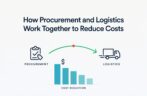
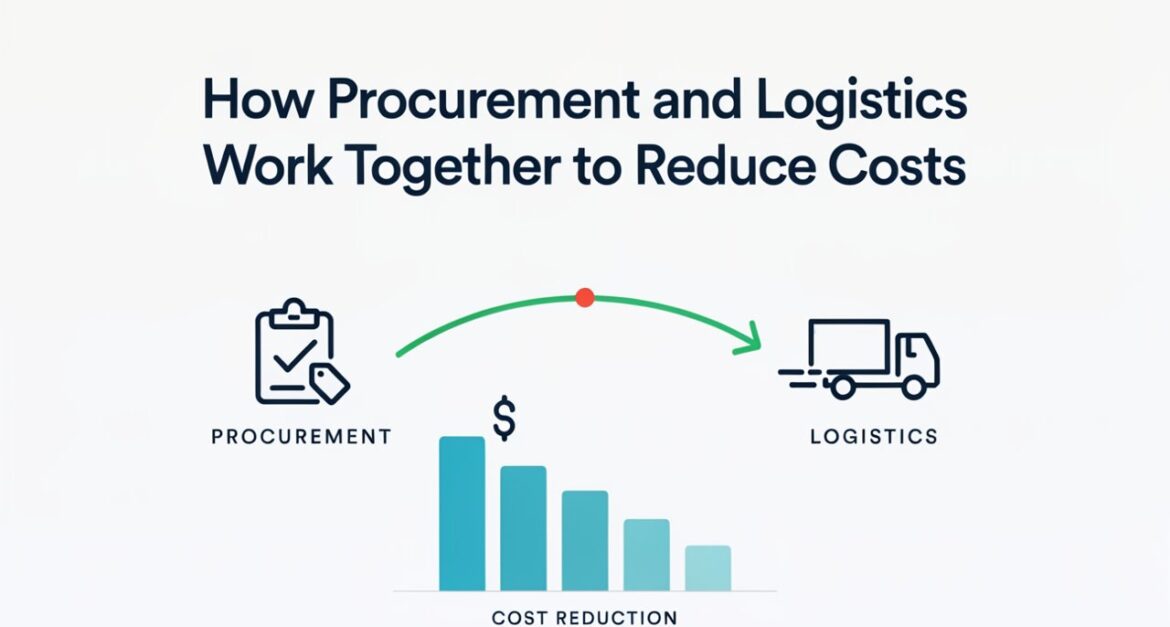
How Procurement and Logistics Reduce Costs Together
Here’s where the real value emerges. Below is a simplified breakdown of how integrated procurement-logistics strategies impact cost centers compared to siloed operations:
| Cost Area | Siloed Approach (Procurement & Logistics Separate) | Integrated Approach (Palm Horizon KSA Model) |
| Freight & Shipping | Reactive booking, higher rush fees | Pre-planned routing, consolidated shipments |
| Warehousing | Overstocking due to poor forecasting | Just-in-time inventory alignment |
| Supplier Costs | Selected on price alone | Selected on total landed cost (price + logistics) |
| Delivery Delays | Frequent, costly expedited shipping | Buffered timelines, predictive tracking |
| Administrative Overhead | Duplicate processes, miscommunication | Shared data systems, single source of truth |
The core principle: procurement should never evaluate a supplier purely on unit price. The true cost includes freight, customs, storage, and delivery reliability — all of which fall under logistics.
This combined evaluation is often called Total Landed Cost (TLC) analysis, and it’s one of the most effective cost-reduction tools available when procurement and logistics collaborate.
Use Cases and Real-World Applications
Retail & E-commerce
Retailers use integrated procurement-logistics planning to synchronize inventory replenishment with seasonal demand, avoiding both stockouts and excess warehousing costs.
Manufacturing
Manufacturers coordinate raw material procurement with production schedules and inbound logistics to avoid line stoppages caused by late deliveries — a cost far greater than the material itself.
Construction & Infrastructure
Project-based industries rely on precise procurement plans tied to logistics timelines, since delayed material delivery can halt entire project phases and inflate labor costs.
Oil, Gas & Industrial Supply (Highly Relevant in KSA Markets)
In Saudi Arabia’s industrial and energy sectors, procurement and logistics integration is critical due to long supply chains, customs complexity, and the high cost of transporting heavy equipment across regions.
Fun Facts Worth Knowing
- Studies on supply chain inefficiency suggest that poor procurement-logistics coordination can inflate total supply chain costs by 10–25% — often invisible in standard budget reports.
- The concept of “Total Landed Cost” became mainstream only after companies realized that cheaper suppliers overseas often cost more once freight, customs, and delay risks were factored in.
- Warehousing costs are frequently the most underestimated line item in procurement budgets — many businesses only account for purchase price and shipping, ignoring storage duration costs entirely.
- Some of the world’s largest retailers now employ dedicated “procurement-logistics liaison” roles — a job title that didn’t widely exist a decade ago.
Comparison: Traditional Supply Chain Management vs. Integrated Procurement-Logistics Strategy
| Feature | Traditional Model | Integrated Model (Palm Horizon KSA) |
| Decision-Making | Siloed departments | Cross-functional collaboration |
| Cost Evaluation | Unit price focus | Total landed cost focus |
| Technology Use | Manual tracking, spreadsheets | Advanced logistics technology, real-time data |
| Risk Management | Reactive | Predictive and proactive |
| Supplier Selection | Price-driven | Reliability + cost + logistics fit |
Businesses that shift from the traditional model to an integrated one typically see measurable improvements in delivery consistency, reduced emergency freight spending, and better supplier accountability.
Implementation Overview: How Palm Horizon KSA Approaches Integration
For businesses looking to merge procurement and logistics into a single cost-saving strategy, the implementation generally follows these phases:
- Assessment – Audit current procurement and logistics processes to identify disconnects and hidden costs.
- Data Integration – Connect procurement software with logistics tracking systems for shared visibility.
- Supplier Re-Evaluation – Reassess vendors based on total landed cost rather than price alone.
- Technology Deployment – Introduce advanced logistics technology such as route optimization tools and automated inventory systems.
- Process Alignment – Establish shared KPIs between procurement and logistics teams (not separate scorecards).
- Continuous Monitoring – Use predictive analytics to catch cost anomalies before they escalate.
This phased approach ensures businesses don’t just “add technology” but fundamentally restructure how procurement and logistics teams collaborate.
Frequently Asked Questions
What is a procurement plan, and why does it matter for cost control?
A procurement plan is a strategic outline of what a business needs to buy, from whom, and when — and it matters because it prevents reactive, costly purchasing decisions that ignore logistics realities like shipping and storage.
How do I make a procurement plan that includes logistics considerations?
Start by forecasting demand, auditing suppliers based on total landed cost, and mapping transportation and warehousing needs before finalizing purchase timelines — not after orders are placed.
What is procurement in simple terms?
Procurement is the strategic process of sourcing, negotiating, and acquiring the goods or services a business needs, going beyond simple purchasing to include supplier management and cost forecasting.
How does advanced logistics technology reduce procurement costs?
Advanced logistics technology provides real-time shipment tracking, predictive delay alerts, and route optimization, allowing procurement teams to make purchasing decisions based on accurate delivery data rather than assumptions.
Why do companies lose money when procurement and logistics operate separately?
When the two functions don’t communicate, businesses often select suppliers based on price alone, order without considering shipping timelines, and end up paying for rush shipping, overstocked warehouses, or project delays.
Is Total Landed Cost more important than the purchase price?
Yes — total landed cost accounts for freight, customs, storage, and delivery reliability, giving a far more accurate picture of what a purchase actually costs a business.
Final Thoughts: Why Integration Is No Longer Optional
The businesses that will thrive in the next decade aren’t the ones with the cheapest suppliers — they’re the ones that understand cost holistically. Procurement and logistics were never meant to operate in isolation, and treating them that way is one of the most expensive mistakes a company can make.
At Palm Horizon KSA, we help businesses build procurement plans that account for logistics realities from day one — reducing hidden costs, improving delivery reliability, and turning supply chain management into a genuine competitive advantage rather than a constant expense.
If your procurement and logistics teams are still working in silos, the cost of that separation is likely higher than you think. The solution isn’t more spreadsheets — it’s a connected strategy built around total cost, not just purchase price.