

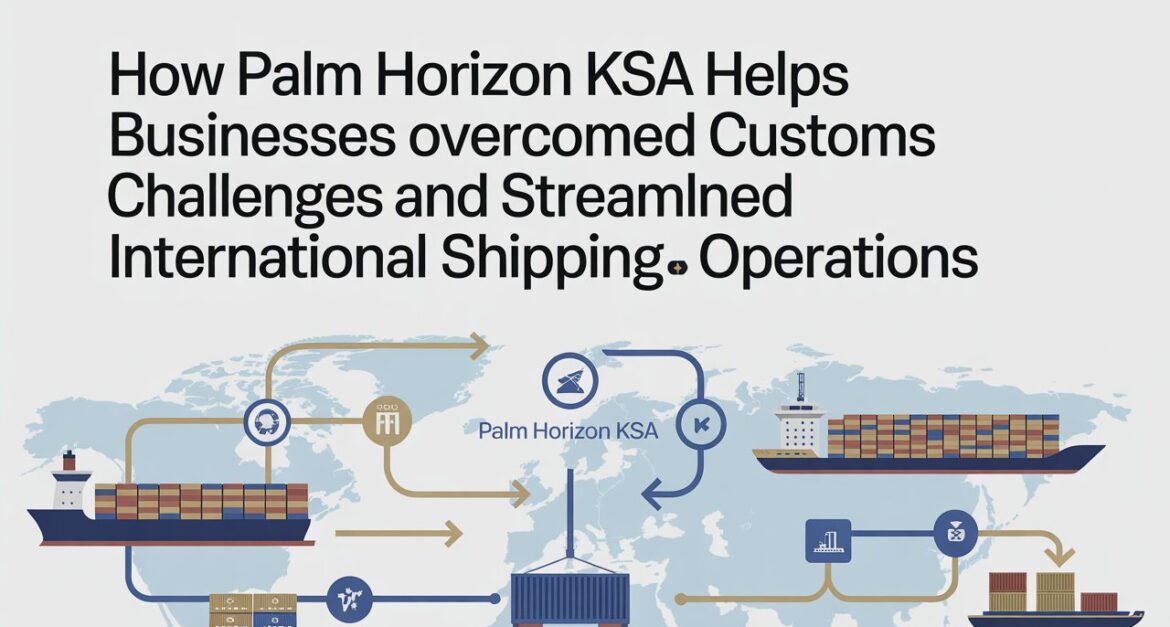
Every year, thousands of shipments sit idle at Saudi ports — not because of the goods themselves, but because of paperwork.
A single transposed digit on an HS code. A missing SABER certificate. A VAT declaration that doesn’t align with ZATCA’s latest compliance framework. These are not catastrophic failures. They are small, mundane errors that, in the context of Saudi Arabia’s customs regime, translate into real costs: detention fees, warehouse charges, delayed production lines, and — in worst cases — confiscated cargo.
The Kingdom of Saudi Arabia has transformed itself into one of the most strategically significant trade hubs in the world. With Vision 2030 accelerating port infrastructure, the expansion of NEOM, and growing demand across manufacturing, construction, healthcare, and e-commerce sectors, the volume of goods crossing Saudi borders has never been higher. But with scale comes scrutiny. The Saudi Customs Authority — now operating with deeply integrated digital systems under the Fasah platform — holds importers to a standard that many businesses, especially those new to the market, are simply not prepared for.
This is the gap Palm Horizon KSA was built to close.
What Is Palm Horizon KSA?
Palm Horizon KSA is a Saudi Arabia-based freight forwarding and customs brokerage firm specializing in end-to-end international shipping solutions for businesses importing and exporting through the Kingdom. Operating at key Saudi entry points including King Abdulaziz Port (Dammam), Jeddah Islamic Port, and King Khalid International Airport (Riyadh), the company combines licensed customs expertise with advanced logistics technology to eliminate the friction points that cost businesses time and money.
Unlike generalist freight forwarders who treat customs clearance as an afterthought, Palm Horizon KSA positions compliance, documentation accuracy, and regulatory intelligence as the core of its value proposition. The firm serves businesses across retail, manufacturing, pharmaceutical, food and beverage, industrial equipment, and consumer electronics sectors — any industry where getting goods into or out of Saudi Arabia quickly and correctly is a competitive necessity.
Fun Fact: Saudi Arabia’s King Abdulaziz Port in Dammam is ranked among the top 100 busiest container ports globally, handling over 1.5 million TEUs annually. A single peak-season backup at the port can delay clearance by up to 10 days without a prepared agent.
The Real Problem: Why Customs Clearance in Saudi Arabia Is So Complex
To understand what Palm Horizon KSA does, you first have to understand what makes custom clearance in Saudi Arabia genuinely difficult — not just administratively tedious, but strategically demanding.
Saudi Arabia’s Customs Regulatory Stack Is Layered
The customs clearance procedure in Saudi Arabia is governed by a multi-authority framework. The Saudi Customs General Authority sets the tariff and declaration rules. ZATCA (Zakat, Tax and Customs Authority) oversees VAT compliance on imports. SASO (Saudi Standards, Metrology and Quality Organization) controls product standards and mandatory certifications. The Saudi Food and Drug Authority (SFDA) applies to consumables and pharmaceuticals. MOCCAE handles environmental and agricultural inspections.
A single shipment — say, a container of industrial machinery with embedded software — may need to satisfy four of these bodies simultaneously. Missing clearance from any one of them holds the entire shipment.
HS Code Misclassification Is the #1 Error
The Harmonized System code determines your duty rate, your VAT treatment, and whether your goods require additional permits. Saudi customs operates on an 8-digit HS classification system, and ZATCA audits declarations retroactively. A classification error discovered two years after import can result in back-duty assessments with penalties. According to GCC trade compliance data, HS code misclassification contributes to delays in roughly 65% of flagged shipments — making it the single most consequential documentation error in the Saudi market.
The SABER Platform Is Mandatory — and Missed by Many
Since 2019, Saudi Arabia requires that all regulated products imported into the Kingdom carry SABER certification — a digital conformity assessment certificate issued through the SASO portal. First-time importers routinely discover this requirement only after their cargo arrives at port, at which point the shipment is held pending certification, often incurring storage fees exceeding SAR 500 per day per container.
VAT on Imports: The 15% Complexity
Saudi Arabia raised its VAT rate to 15% in 2020. For importers, this means every commercial shipment carries an import VAT obligation that must be correctly calculated and declared. Errors in customs valuation — the declared value of goods — directly affect VAT liability and can trigger ZATCA investigations. For businesses using third-party suppliers with variable invoicing practices, ensuring customs value accuracy is a recurring operational challenge.
Fun Fact: Saudi Arabia joined the WTO in 2005, which triggered one of the most significant overhauls of its customs code in modern history. Today, Saudi customs processes over 6 million declarations annually through the Fasah digital platform — up from under 1 million paper-based declarations in 2010.
Core Services: What Palm Horizon KSA Actually Does
1. Full-Service Custom Clearance in Saudi Arabia
Palm Horizon KSA handles the complete customs clearance procedure in Saudi Arabia on behalf of importers and exporters. This includes:
- Pre-arrival document review and HS code verification
- Preparation and submission of customs declarations via Fasah
- Coordination with Saudi Customs, ZATCA, SASO, and SFDA as required
- Duty and VAT payment facilitation
- Cargo release follow-up and port liaison
- Post-clearance audit support
The firm operates with licensed customs brokers (murakhkhas) who hold formal authorization from Saudi Customs — a legal requirement for any entity submitting customs declarations on behalf of a third party.
2. Freight Forwarding (Sea, Air, and Land)
Beyond clearance, Palm Horizon KSA coordinates the physical movement of goods. Ocean freight services cover FCL (Full Container Load) and LCL (Less than Container Load) bookings from origins in Asia, Europe, and the Americas. Air freight services support time-sensitive cargo, with direct connections through King Khalid International Airport and King Abdulaziz International Airport (Jeddah). Cross-border land freight services connect Saudi Arabia to the UAE, Kuwait, Bahrain, and Jordan.
3. SABER Certification and Product Conformity Support
Palm Horizon KSA assists importers in obtaining SABER certification before goods are shipped. The firm works with accredited Conformity Assessment Bodies (CABs) to prepare technical files, submit certification applications, and obtain the digital Product Certificate of Conformity (PCoC) required for customs release. This pre-shipment certification service alone eliminates the most common cause of detention for new importers.
4. Warehouse and Distribution Services
Post-clearance, Palm Horizon KSA provides bonded warehousing, inland distribution to major Saudi cities (Riyadh, Jeddah, Dammam, Khobar, Jubail), and last-mile delivery coordination. This is particularly valuable for e-commerce businesses and retail chains requiring flexible inventory distribution across the Kingdom.
5. Trade Compliance Advisory
For businesses scaling their Saudi import operations, Palm Horizon KSA offers regulatory consulting — including HS classification reviews, import duty optimization through Saudi Arabia’s Free Trade Agreements, and customs procedure consulting for bonded zones and special economic areas such as the Jazan Special Economic Zone and King Abdullah Economic City.
The Customs Clearance Procedure in Saudi Arabia: Step by Step
Understanding the process helps businesses appreciate where Palm Horizon KSA adds value at each stage.
Step 1 — Pre-Shipment Preparation Documents are reviewed before the shipment leaves origin. This includes the commercial invoice, packing list, bill of lading or airway bill, certificate of origin, and any product-specific certificates (SABER, SFDA, etc.). Palm Horizon KSA verifies HS codes, confirms SABER registration status, and flags any documentation gaps.
Step 2 — Arrival Notification and Port Coordination Upon vessel or aircraft arrival, Palm Horizon KSA coordinates with the port operator to receive the manifest and arrange examination scheduling if required by customs.
Step 3 — Customs Declaration Submission (Fasah) The import declaration is submitted through Fasah, Saudi Arabia’s single window for trade. Palm Horizon KSA prepares the declaration with correct HS codes, declared values, country of origin, and applicable exemptions or duty suspensions.
Step 4 — Duty and VAT Assessment Saudi Customs calculates applicable duties. Palm Horizon KSA reviews the assessment for accuracy, challenges incorrect assessments where applicable, and facilitates payment through approved channels.
Step 5 — Physical Examination (if selected) Customs may require physical inspection of the goods. Palm Horizon KSA coordinates inspector access and represents the importer during examination.
Step 6 — Cargo Release Upon payment and customs approval, the release order is issued. Palm Horizon KSA arranges trucking and final delivery to the importer’s designated location.
Step 7 — Post-Clearance Documentation All customs declarations, duty payment receipts, and certificates are archived for the importer’s records — essential for ZATCA audit readiness.
Fun Fact: The word “customs” in Arabic is Jumārik (جمارك), derived from the Byzantine Greek word for tax collection. Saudi Arabia’s customs system has ancient roots — the Hejaz region along the Red Sea was one of the world’s first formalized trade corridors, used by incense and spice traders for over 3,000 years before modern borders existed.
Industries and Use Cases: Who Benefits Most
Manufacturing and Industrial Equipment Heavy machinery imports for industrial projects in Jubail, Yanbu, and Neom require specialized customs handling — including correct tariff classification under Chapters 84–85 of the HS code, and often, import permits for machinery with embedded technology. Palm Horizon KSA has deep experience with capital goods clearance.
E-Commerce and Consumer Retail With Saudi e-commerce growing at over 20% annually, cross-border sellers and regional distributors need rapid, repeatable clearance processes. Palm Horizon KSA handles high-frequency, lower-value commercial shipments with streamlined documentation templates and pre-registered supplier relationships.
Food, Beverage, and Pharmaceuticals SFDA-regulated goods require specific labeling compliance, halal certification coordination, and cold-chain logistics management. Palm Horizon KSA works with SFDA-approved warehousing partners and coordinates registration documentation for first-time product introductions into the Saudi market.
Construction and Building Materials With Vision 2030’s giga-projects driving unprecedented construction demand, building material imports — steel, glass, cement additives, prefabricated structures — require accurate classification to avoid anti-dumping duties and ensure correct origin documentation.
Technology and Electronics Consumer electronics, communications equipment, and software-embedded devices require CITC (Communications, Space & Technology Commission) type approval in addition to SABER certification. Palm Horizon KSA manages the multi-agency clearance process for tech importers.
Advanced Logistics Technology: The Digital Infrastructure Behind Palm Horizon KSA
One of the key differentiators Palm Horizon KSA brings to the market is its integration of advanced logistics technology into every stage of the shipment lifecycle.
The firm uses cloud-based shipment tracking platforms that provide importers with real-time visibility into shipment status — from vessel departure at origin to customs clearance milestone, duty payment confirmation, and final delivery. Clients receive automated notifications at each stage rather than chasing updates via phone or email.
On the compliance side, Palm Horizon KSA uses digital HS code databases with GCC tariff schedules, real-time ZATCA regulation updates, and document verification checklists that are updated whenever Saudi Customs or SASO issues a circular or regulatory change. This means clients benefit from compliance intelligence that would otherwise require a dedicated in-house trade compliance team to maintain.
The firm also connects into Fasah’s API infrastructure, enabling faster declaration submission and reducing manual data entry errors that commonly trigger customs queries.
Fun Fact: Saudi Arabia’s Fasah platform — meaning “spaciousness” or “ease” in Arabic — was built with Singapore’s TradeNet system as a conceptual benchmark. Today, it handles declarations across 14 government agencies through a single digital window, a level of integration that fewer than 20 countries in the world have achieved.
Palm Horizon KSA vs. Doing Customs Clearance In-House
Many mid-sized importers consider managing customs clearance in-house to reduce costs. Here is what that comparison actually looks like in practice.
An in-house customs function requires a licensed Saudi customs broker (significant cost to hire and retain), fluency in Fasah and ZATCA’s digital systems, a dedicated compliance officer tracking SASO and SFDA updates, and relationships with port operators at multiple Saudi entry points. The total cost of a capable in-house team capable of handling this across multiple product categories and entry points typically exceeds the annual cost of a managed customs broker service significantly — with far less flexibility to scale during peak import periods.
Palm Horizon KSA offers the benefit of a fully staffed, specialist team with existing regulatory relationships, without the overhead of building that function internally. For businesses that import sporadically or are entering the Saudi market for the first time, this is especially significant.
Implementation: Getting Started with Palm Horizon KSA
The onboarding process is structured to get new clients operational quickly. An initial consultation covers the business’s product categories, import frequency, current logistics setup, and any compliance history. Palm Horizon KSA then prepares a service proposal with pricing, assigned account managers, and a customs readiness assessment that identifies any pre-shipment certification requirements.
From first contact to first cleared shipment, most clients are operational within two to three weeks — covering documentation templates, supplier notification letters, and Fasah agent authorization.
For ongoing clients, Palm Horizon KSA operates on an account management model with dedicated points of contact rather than rotating support queues — ensuring that the agent handling a client’s shipment understands the product categories, usual suppliers, and any prior customs interactions relevant to that account.
Frequently Asked Questions
Q: What documents are required for custom clearance in Saudi Arabia?
The standard document set for commercial imports includes a commercial invoice, packing list, bill of lading (sea) or airway bill (air), certificate of origin, and — for regulated products — the relevant SABER certificate, SFDA registration, or CITC type approval. Palm Horizon KSA conducts a document checklist review before each shipment to ensure nothing is missing before the cargo reaches port.
Q: How long does the customs clearance procedure in Saudi Arabia take?
For straightforward shipments with complete documentation, customs clearance in Saudi Arabia typically takes between one and three working days after cargo arrival. Shipments selected for physical examination or missing certifications can take five to fourteen days or longer. Palm Horizon KSA’s pre-clearance preparation process is specifically designed to eliminate the documentation gaps that cause delays, with most managed shipments clearing within the standard window.
Q: What is a SABER certificate, and does my product need one?
SABER is Saudi Arabia’s electronic product conformity platform, managed by SASO. It is mandatory for all products that fall under Saudi technical regulations — which includes a broad range of consumer goods, electrical equipment, building materials, toys, and automotive parts, among others. Without SABER certification, your goods will be held at port. Palm Horizon KSA can determine SABER applicability for your specific product and manage the certification process before your shipment departs.
Q: How is import duty calculated in Saudi Arabia, and what rate applies to my goods?
Saudi Arabia applies the GCC Unified Customs Tariff, which sets most duties at 5% of customs value. However, specific product categories attract higher rates — consumer goods, automobiles, and certain agricultural products can carry duties between 12% and 25%. Anti-dumping duties apply to steel and some chemical products. Customs value is based on CIF (Cost, Insurance, Freight) value, meaning transport and insurance costs are included in the taxable base. Palm Horizon KSA provides pre-shipment duty calculations so clients can forecast landed costs accurately.
Q: Can Palm Horizon KSA handle clearance for first-time importers with no prior Saudi customs history?
Yes. Palm Horizon KSA specializes in onboarding first-time importers into the Saudi market. The firm’s compliance readiness assessment identifies all regulatory requirements specific to your product categories, supply chain origin, and intended end use — before your first shipment is booked. This prevents the costly trial-and-error experience that most first-time importers go through without specialist guidance.
Q: Does Palm Horizon KSA handle both imports and exports from Saudi Arabia?
Yes. In addition to import customs clearance, Palm Horizon KSA manages export declarations, certificate of origin procurement (including Arab League and GCC preferential origin certificates), re-export procedures for bonded goods, and compliance with Saudi export controls for restricted products.
Q: What is the role of ZATCA in Saudi customs clearance?
ZATCA (Zakat, Tax and Customs Authority) is the unified authority responsible for both VAT administration and customs regulation in Saudi Arabia. When you import goods, ZATCA assesses and collects import VAT at 15% of the customs value plus applicable duties. ZATCA also conducts post-clearance audits and can issue back-assessments for incorrectly declared shipments. Having a licensed customs broker like Palm Horizon KSA ensures your declarations are ZATCA-compliant from the outset.
Conclusion: The Right Partner Changes the Equation
Saudi Arabia’s trade environment is genuinely exciting — and genuinely unforgiving. The Kingdom’s infrastructure investments, regulatory modernization, and economic diversification agenda mean that businesses that get their logistics right now are positioning themselves for substantial long-term gains. But the path between opportunity and outcome runs directly through the customs gate.
Palm Horizon KSA exists to make that crossing as smooth, fast, and compliant as possible. By combining licensed customs brokerage expertise with advanced logistics technology, deep regulatory knowledge, and a service model built around client accountability rather than transaction volume, the firm gives businesses — whether they are entering Saudi Arabia for the first time or scaling established import operations — a genuine competitive advantage at the border.
If your shipments are sitting longer than they should, if your duty costs are higher than expected, or if your team is spending hours chasing customs status updates instead of running the business, the problem is solvable. It starts with the right partner.