
Introduction
A container reaches the port on schedule. The goods inside are exactly what the buyer ordered. And yet it sits there for days.
The reason is rarely the cargo. It’s usually the paperwork: a description on the invoice that doesn’t match the packing list, a missing certificate, a weight that differs between two documents. Each is small. Each can stop a shipment.
For businesses importing into Saudi Arabia, documentation is the bridge between a supplier’s warehouse and your own. Customs authorities, regulators, carriers and brokers all rely on the same set of papers to understand what is arriving, who it belongs to, what it’s worth and whether it meets the rules. If the documents are clear, consistent and complete, the shipment has a smoother path. If not, it waits.
This guide explains what import documentation is, the seven essential import documents, the importance of documentation in international shipping and for Saudi imports specifically, plus a checklist, common mistakes, a step-by-step preparation process and how Palm Horizon KSA supports documentation coordination.
What Is Import Documentation?
Import documentation is the set of documents and records needed to move goods from a foreign supplier into a destination country and clear them through customs. It describes the goods, the parties, the transaction, the transport and any approvals needed.
What Are Import Documents?
Import documents are the individual papers or electronic records within that set, such as the commercial invoice, packing list, transport document, certificate of origin, permits and customs declaration.
Why Is Import Documentation Required?
- Customs needs it to assess what is entering the country and calculate duties and taxes.
- Regulators need it to check that goods meet safety, quality and legal requirements.
- Carriers need it to handle and release cargo to the right party.
- Businesses need it for payment, accounting, audits and dispute resolution.
How Does the Import Documentation Process Work?
- The buyer and supplier agree the sale and shipping terms.
- The supplier prepares commercial and shipping documents.
- Required permits, certificates and approvals are arranged.
- The documents are checked for accuracy and consistency.
- A customs declaration is prepared and submitted.
- Customs reviews the documents and may inspect the goods.
- Duties and taxes are paid and cargo is released for delivery.
Who Is Responsible for Preparing Import Documents?
Responsibility is shared. The supplier usually prepares the invoice, packing list and certificates of origin. The carrier issues the transport document. The importer is responsible for permits, product compliance and accurate declarations, often with help from a customs broker or freight forwarder.
How Does Import Documentation Support Customs Clearance?
Customs clearance is the process of checking and approving imports. Accurate documents let officials verify what’s in the shipment, confirm its value and classification, and decide whether it can be released. Weak documents lead to questions, holds and inspections.
Import Documentation: 7 Essential Import Documents Businesses Should Know
1. Commercial Invoice
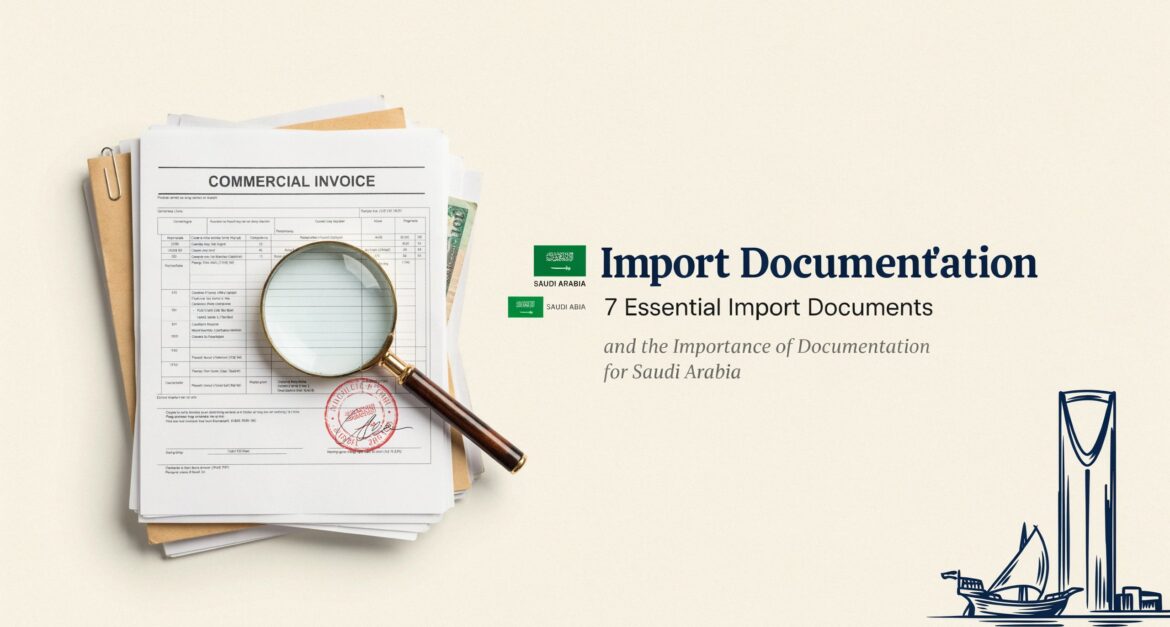
The commercial invoice records the sale between seller and buyer. It lists product descriptions, quantities, unit prices, total value, currency, payment and delivery terms, and the names and addresses of both parties. Customs often uses it to assess value and calculate duties and taxes.
2. Packing List
The packing list describes what is physically in the shipment: contents of each package, quantities, weights and dimensions. It supports cargo handling and inspection, and it should match the invoice and the actual cargo.
3. Bill of Lading or Air Waybill
These are the transport documents. A Bill of Lading is used for sea freight and an Air Waybill for air freight. They provide evidence of the shipment details and the terms of carriage, and they identify who is entitled to receive the goods.
4. Certificate of Origin
This document states the country where the goods were produced. It may be required for customs procedures or for preferential tariff treatment where applicable, and some documents may need attestation or legalization depending on current rules.
5. Import Permit or License
Some products need permits, licenses or approvals before they can be imported, depending on the applicable regulations. Examples may include certain regulated goods, medicines, chemicals or controlled items.
6. Customs Declaration
The customs declaration provides official information about the imported goods: classification, value, origin, quantity and other details required by customs authorities. It is the formal filing that starts clearance.
7. Product-Specific Certificates and Compliance Documents
Certain goods need additional certificates, conformity documents, health certificates or other approvals, depending on the product and current Saudi regulations. Examples include conformity proof for regulated consumer products or health and safety documents for food and medical goods.
Importance of Documentation in International Shipping
How Documentation Helps Prevent Customs Delays
Complete documents reduce the number of queries customs needs to raise and make it easier to process declarations quickly.
How Accurate Documents Reduce Errors
When every document tells the same story, there’s less room for misunderstanding, rework or disputes.
How Documentation Supports Regulatory Compliance
Documents provide evidence that goods meet the necessary rules and approvals before they enter the market.
How Import Documents Help Verify Shipment Details
They let customs, carriers and receivers confirm what the goods are, how much there is and who is responsible.
How Documentation Improves Communication Between Suppliers and Importers
Clear, standard documents give both sides a shared reference for quantities, prices, terms and timing.
How Proper Records Support Financial and Business Audits
Stored documents prove costs, duties paid and the movement of goods, which is valuable for accounting, tax and audit reviews.
How Documentation Helps Businesses Track and Manage Shipments
Reference numbers, dates and shipment details make it easier to follow cargo and plan receiving.
Importance of Documentation for Importing Goods into Saudi Arabia
Meeting Saudi Customs Documentation Requirements
Saudi customs is administered by the Zakat, Tax and Customs Authority (ZATCA). Importers need correct documents and declarations that follow its requirements.
Preparing Documents for Customs Clearance
Prepare and check documents before the cargo arrives. Waiting until the shipment is at the port leaves little room to fix problems.
Checking Product Classification and Declared Values
Customs classification and declared value affect duties and taxes. Make sure the product description supports the classification, and that the declared value matches the commercial invoice.
Verifying Importer and Shipment Information
Names, addresses, registration details and shipment references should be correct and consistent across all documents.
Identifying Products That Require Special Approvals
Some product categories need permits or approvals from relevant Saudi authorities. Identify these early, ideally before the order is placed.
Understanding SABER and Product Conformity Requirements
Many regulated products entering Saudi Arabia must demonstrate conformity with technical regulations and standards, often through the SABER platform, which handles product and shipment conformity certificates. Whether your goods are covered depends on the product category, so confirm this before shipping.
Coordinating Documentation with Freight Forwarders
Freight forwarders and customs brokers can help keep documents aligned with the shipping plan, but the importer should still verify that the information is correct.
Saudi requirements vary by product category, origin, customs classification and applicable regulations. Verify current requirements with ZATCA and the relevant Saudi regulatory authority before shipping.
Import Documents Checklist Before Shipping
- [ ] Confirm the commercial invoice details: parties, descriptions, quantities, prices, currency and terms
- [ ] Match the packing list with the actual cargo: counts, weights and dimensions
- [ ] Verify the Bill of Lading or Air Waybill: consignee, shipper, description and shipment details
- [ ] Check the certificate of origin: correct origin and any required attestation
- [ ] Confirm required permits and product certificates: valid and applicable to your goods
- [ ] Review customs declaration information: classification, value, origin and quantities
- [ ] Verify consistency across all documents: names, numbers, weights and descriptions agree
- [ ] Keep digital and physical records where required: organized and retrievable
Common Import Documentation Mistakes Businesses Should Avoid
- Incorrect product descriptions: vague or inconsistent wording that doesn’t match the goods
- Mismatched quantities or shipment weights: different totals between invoice, packing list and transport document
- Inconsistent invoice and packing list details: differences in item names, codes or counts
- Incorrect customs classification: the wrong code can change duties and requirements
- Missing certificates or permits: required approvals not obtained in time
- Incorrect importer information: wrong name, address or registration number
- Expired or incomplete documents: certificates past their validity or missing signatures and details
- Submitting documents too late: leaving too little time for review and clearance
How to Prepare Import Documentation Step by Step
Step 1: Identify the Goods and Their Import Requirements
Know exactly what you’re importing and which rules apply to that product.
Step 2: Confirm the Importer and Supplier Details
Check names, addresses and registration information on both sides.
Step 3: Collect the Required Commercial Documents
Request the commercial invoice, packing list and any contract references from your supplier.
Step 4: Verify Product Classification and Declared Value
Confirm that the classification and value are supportable and consistent with the invoice.
Step 5: Obtain Applicable Certificates and Approvals
Arrange permits, conformity documents and product certificates well before shipping.
Step 6: Check All Documents for Consistency
Compare every document line by line. Small mismatches are the most common cause of delay.
Step 7: Coordinate Submission and Customs Clearance
Work with your broker or forwarder to submit documents on time and respond quickly to questions.
Step 8: Store Records for Future Reference
Keep copies in an organized system for audits, disputes and future shipments.
Digital Import Documentation and Paperless Shipping
- Benefits of digital import documents: faster sharing, easier searching and less physical handling
- Electronic document sharing with logistics partners: suppliers, brokers and forwarders can work from the same files
- Document management systems for importers: central storage, version control and access permissions
- Reducing manual data entry errors: data captured once and reused rather than retyped
- Improving document visibility and accessibility: teams can find what they need quickly
- Protecting sensitive shipping information: use access controls and secure storage for commercial and financial data
Import Documentation vs. Export Documentation
| Factor | Import Documentation | Export Documentation |
| Main purpose | Supports the receipt and clearance of incoming goods | Supports the shipment and clearance of outgoing goods |
| Responsible parties | Importer, supplier, broker and logistics partners as applicable | Exporter, supplier, broker and logistics partners as applicable |
| Common documents | Commercial invoice, packing list, transport document and required permits | Commercial invoice, packing list, transport document and required export documents |
| Regulatory focus | Import rules and requirements in the destination country | Export rules and requirements in the country of departure |
| Key consideration | Confirm destination-country requirements before shipment | Confirm export-country and destination requirements before dispatch |
How Import Documentation Affects Shipping Costs and Delivery Times
- Preventing delays caused by missing paperwork: goods don’t wait while documents are chased
- Reducing reprocessing and correction costs: fewer amendments and resubmissions
- Supporting faster customs coordination: clean documents are easier to review
- Avoiding unnecessary storage and handling expenses: less time in port or terminal storage
- Improving shipment planning and communication: receivers know when to expect cargo
How Delays Add Up: A Quick Illustration
Port and terminal storage often includes a limited number of free days, after which daily charges apply. Here is an assumed example: three free days, then SAR 250 per day. If a documentation problem delays release, the cost starts to build quickly once free time ends. These figures are assumptions only. Actual free time and charges vary by port, carrier and terminal.
This example is for a single container with invented rates. Check the free time and charges in your own shipping agreement.
Import Documentation for Different Types of Cargo
Import Documents for General Commercial Goods
Typically the commercial invoice, packing list, transport document, certificate of origin where required and the customs declaration.
Import Documents for Electronics and Electrical Products
In addition to the basics, these may need conformity or technical compliance documents, depending on the product and applicable standards.
Import Documents for Food and Agricultural Products
May need health certificates, origin or processing documents, labeling compliance and approvals from relevant authorities.
Import Documents for Chemicals and Regulated Goods
Often require safety data sheets, permits and approvals because of handling, safety and environmental rules.
Import Documents for Medical and Healthcare Products
Commonly need product registration, authorization and handling documents from the relevant health regulator, plus temperature records for sensitive items.
Import Documents for Machinery and Industrial Equipment
May need technical specifications, conformity documents, weight and dimension details and special handling or permit information for large or heavy items.
Required documents depend on the exact product, intended use, applicable standards and current import regulations.
How Palm Horizon KSA Can Support Import Documentation Coordination
Palm Horizon KSA helps businesses keep import paperwork organized and aligned with the shipment. Its support includes:
- Coordinating shipping documents with relevant parties: keeping suppliers, carriers and importers on the same page
- Supporting freight forwarding arrangements: linking documentation with transport plans
- Helping businesses organize shipment information: consistent details across documents and systems
- Coordinating documentation for international shipments: helping ensure the right papers are ready at the right time
- Providing shipment updates during the logistics process: clear communication as cargo moves
If you’re planning an import and want your paperwork reviewed against your shipping plan, speak with the Palm Horizon KSA team early.
Import Documentation Best Practices for Businesses
- Create a standard import documents checklist: use it for every shipment
- Confirm requirements before booking freight: know what’s needed before cargo is moving
- Request documents from suppliers early: give time for corrections
- Check document accuracy before submission: verify details line by line
- Maintain organized digital records: searchable, secure and backed up
- Track document expiry dates where applicable: permits and certificates can lapse
- Coordinate with customs brokers and logistics partners: share information early
- Review requirements when regulations change: rules can be updated
Fun Facts About Import Documentation
- The Bill of Lading is centuries old. Its roots go back to medieval maritime trade, and the name comes from the old sense of “lading,” meaning loading cargo onto a ship.
- Six digits speak a universal language. The Harmonized System code that customs uses to classify goods shares its first six digits across most of the world’s trading countries.
- One digit can change the duty. A small difference in classification can lead to a different duty rate or different requirements.
- Paper still matters. Even in a digital world, many shipments still involve a mix of electronic and paper documents, and consistency between them is key.
- Consistency beats complexity. Many delays come not from complicated rules but from simple mismatches, like a weight that differs by a few kilograms or a company name spelled two ways.
FAQs About Import Documentation
What Is Import Documentation?
It is the set of documents and records needed to bring goods into a country and clear them through customs, describing the goods, the parties, the transaction and any required approvals.
What Are the Most Important Import Documents?
The commercial invoice, packing list, Bill of Lading or Air Waybill, certificate of origin where applicable, import permits or licenses where required, customs declaration and product-specific certificates.
Why Is Documentation Important in International Shipping?
It supports customs clearance, helps meet regulations, verifies shipment details, reduces errors and delays, improves communication and provides records for audits.
What Import Documents Are Required in Saudi Arabia?
Typically a commercial invoice, packing list, transport document, certificate of origin where applicable and a customs declaration, plus permits or conformity documents for regulated products. Requirements vary, so verify with ZATCA and the relevant authority.
Is a Commercial Invoice Required for Imports?
Yes. It records the transaction and is a core document for customs valuation and clearance.
What Is the Difference Between a Packing List and a Commercial Invoice?
The commercial invoice states the sale details, including prices and value. The packing list describes the physical contents of the shipment, including packages, weights and dimensions.
What Is a Certificate of Origin Used For?
To show where goods were produced. It may be required for customs procedures or for preferential tariff treatment where applicable.
Do All Imported Products Require a SABER Certificate?
Not necessarily. SABER requirements apply to certain regulated product categories, so check whether your product is covered before shipping.
What Happens If Import Documents Are Incorrect?
Shipments may be held, queried or inspected, and businesses may face delays, extra storage and handling costs, amendments or other consequences depending on the issue.
Can Import Documentation Be Submitted Electronically?
In many cases, yes. Electronic submission and digital document sharing are widely used, but some documents may still require originals or attestation, so confirm current requirements.
How Can Businesses Reduce Import Documentation Errors?
Use a standard checklist, request documents early, compare them line by line, confirm requirements before booking, store records properly and work with qualified logistics and customs professionals.
Conclusion
Import documents aren’t glamorous, but they decide how smoothly goods cross the border. Customs, regulators, carriers and receivers all rely on them, and a single mismatch can slow an entire shipment.
For businesses importing into Saudi Arabia, the importance of documentation is practical: it supports customs clearance, helps meet regulatory requirements, reduces avoidable errors and keeps shipping costs under control. The most dependable approach is simple. Confirm requirements before you book, collect documents early, check every detail against the others, keep clean records and work with experienced professionals.
Palm Horizon KSA supports importers with document coordination, freight forwarding arrangements, shipment information management and updates throughout the logistics process. Contact the team to discuss how better-prepared paperwork can help your next shipment move more smoothly.