
Global trade moves faster than ever, yet businesses still struggle with a familiar headache: how do you move cargo across cities, countries, and oceans without losing time, money, or product integrity? A shipment that has to switch trucks, ships, and trains often gets damaged, delayed, or lost in paperwork. This is exactly the gap that intermodal transportation was built to close — and understanding how it works can save your supply chain thousands of dollars a year.
In this guide, Palm Horizon KSA breaks down everything you need to know about intermodal transport — from how it actually works, to the technology powering it, to how you can choose the right intermodal partner for your business.
What Is Intermodal Transport?
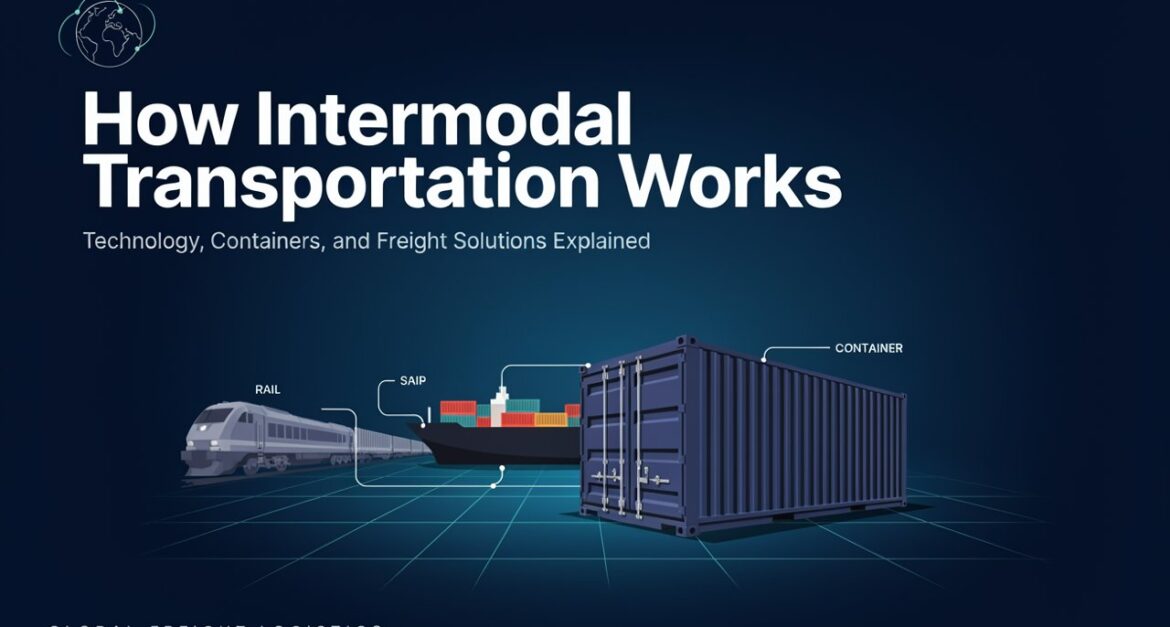
Intermodal transport refers to the movement of cargo using two or more transportation modes — such as truck, rail, ship, or air — while the freight stays inside the same container throughout the entire journey. The cargo itself is never handled directly; only the container is transferred between modes.
Intermodal vs. Multimodal Transportation
People often confuse these two terms, but they are not the same:
- Intermodal transportation uses multiple carriers and multiple contracts, with a different provider often responsible for each leg of the journey.
- Multimodal transportation also uses multiple modes, but a single carrier holds one contract and takes full responsibility for the entire trip, start to finish.
Common Transportation Modes Used in Intermodal Systems
- Rail – ideal for long-distance, high-volume freight movement
- Road (trucking) – used for first-mile pickup and final-mile delivery
- Ocean freight – used for international, high-capacity shipments
- Air freight – used for time-sensitive or high-value cargo
Why Businesses Use Intermodal Solutions
Companies choose intermodal transport because it blends the strengths of each mode — the affordability of rail, the flexibility of trucking, and the global reach of ocean freight — into one efficient, cost-controlled system.
Fun fact: The modern shipping container was invented in 1956 by trucking entrepreneur Malcolm McLean. Before that, cargo was loaded and unloaded by hand, piece by piece — a process so slow that ships spent more time in port than at sea.
How Does Intermodal Transportation Work?
Understanding how intermodal transportation works helps businesses see exactly where efficiency is gained. Here’s the step-by-step process:
- Loading – Cargo is packed into a standardized intermodal container at the point of origin.
- First-mile trucking – The container is transported by truck to the nearest rail yard or port terminal.
- Mode transfer – The container is lifted (not unpacked) onto a train, ship, or another transport mode using cranes or automated lifting equipment.
- Long-haul movement – The container travels across the primary distance — often by rail or ocean — toward the destination region.
- Terminal transfer – Upon arrival, the container is transferred again, typically back onto a truck chassis.
- Final-mile delivery – The container is delivered by road directly to the customer’s warehouse, distribution center, or storefront.
Because the cargo itself is never touched during mode transfers, this process significantly reduces handling time, labor costs, and the risk of damage.
How Do Containers Help to Facilitate Intermodal Transportation?
Containers are the backbone of the entire intermodal system. Here’s exactly how containers help facilitate intermodal transportation:
- Standardized sizes – Containers come in globally recognized dimensions (20-foot and 40-foot units), allowing them to fit trucks, trains, and ships without modification.
- Easy transfer between modes – Because every terminal, crane, and chassis is built around the same container specifications, transfers happen in minutes rather than hours.
- Reduced cargo handling – Goods are loaded once and unloaded once, minimizing manual contact.
- Lower damage risk – Sealed containers protect goods from weather, contamination, and mishandling.
- Faster transfers – Automated cranes can move a container from ship to rail car in under two minutes at major terminals.
- Better shipment security – Tamper-evident seals and locking mechanisms reduce theft and unauthorized access.
Fun fact: A standard 40-foot container can hold roughly 10,000 shoeboxes’ worth of cargo — yet it can be lifted, stacked, and transferred by a single crane operator in seconds.
What Is Intermodal Freight Transport?
Intermodal freight transport is the process by which goods move through multiple transportation modes — road, rail, sea, or air — under a single, integrated logistics plan, while remaining inside the same loading unit from origin to destination.
Unlike traditional freight shipping, where cargo may be repackaged or transferred by hand at each stage, intermodal freight transport treats the container as the unit of movement. This integrated planning approach allows logistics providers to optimize routes, reduce costs, and maintain consistent transit visibility across every leg of the journey.
How Has Technology Affected Intermodal Transportation?
Technology has transformed intermodal logistics from a manual, paperwork-heavy process into a highly automated, data-driven system. Here’s how technology has affected intermodal transportation:
- GPS and real-time tracking – Shippers can monitor container location at every stage of the journey.
- Transportation management systems (TMS) – Software platforms coordinate routing, scheduling, and carrier communication automatically.
- IoT sensors – Smart sensors inside containers monitor temperature, humidity, and shock — critical for perishable or fragile goods.
- Automated terminals – Robotic cranes and driverless yard vehicles speed up container transfers and reduce human error.
- Digital documentation – Electronic bills of lading and customs paperwork eliminate delays caused by lost or incomplete physical documents.
- AI and predictive analytics – Machine learning models forecast delays, optimize routing, and predict maintenance needs before failures occur.
- Electronic Data Interchange (EDI) – Enables instant, standardized data exchange between shippers, carriers, and terminals.
Simple Efficiency Comparison: Traditional vs. Technology-Enabled Intermodal Transport
| Metric | Traditional Process | Technology-Enabled Process |
| Average terminal transfer time | 15–20 minutes | 2–5 minutes |
| Shipment visibility | Manual check-ins | Real-time GPS tracking |
| Documentation processing | 1–3 days | Minutes (digital EDI) |
| Delay prediction | Reactive | Predictive (AI-based) |
| Damage/loss rate | Higher | Significantly lower |
This shift toward automation is one of the biggest reasons intermodal transport has become the preferred choice for cost-conscious, efficiency-driven businesses.
What Do Intermodal Transportation Companies Do?
Intermodal transportation companies manage the complex coordination required to move freight across multiple modes smoothly. Their core responsibilities include:
- Route planning – Designing the most cost-effective and time-efficient path across rail, road, and sea.
- Carrier coordination – Managing relationships and scheduling with multiple transport providers.
- Container management – Ensuring container availability, condition, and proper allocation.
- Terminal coordination – Scheduling and confirming transfer windows at ports and rail yards.
- Shipment tracking – Providing real-time visibility to clients throughout the journey.
- Documentation – Handling customs paperwork, bills of lading, and compliance requirements.
- Final-mile delivery – Coordinating the last leg of trucking to ensure on-time arrival at the destination.
At Palm Horizon KSA, this coordination is centralized so businesses get a single point of contact instead of juggling multiple vendors.
What Is a Regional Intermodal Transportation Center?
A regional intermodal transportation center is a dedicated hub where different transportation modes — rail, road, and sometimes air or sea — connect within a single, coordinated facility.
How It Connects Different Transportation Modes
These centers are built with rail sidings, truck loading bays, and container yards all in one location, allowing freight to move between modes without long-distance repositioning.
Its Role in Regional Freight Movement
Regional intermodal centers act as consolidation points, gathering freight from surrounding areas and funneling it into larger, more efficient long-haul shipments — then reversing the process for inbound cargo.
Benefits for Businesses and Supply Chains
- Shorter transit times for regional shipments
- Reduced trucking costs by minimizing long-haul road mileage
- Better access to national and international rail/ocean networks
- Improved reliability due to centralized scheduling
How These Centers Improve Cargo Transfer Efficiency
By keeping cranes, chassis, and rail lines within close proximity, regional intermodal centers cut transfer times dramatically compared to freight that must travel between separate, disconnected facilities.
7 Benefits of Intermodal Transportation for Businesses
- Lower Transportation Costs – Combining rail’s fuel efficiency with trucking’s flexibility reduces per-mile shipping costs.
- Better Fuel Efficiency – Trains can move one ton of freight roughly 470 miles on a single gallon of fuel, far surpassing long-haul trucking alone.
- Greater Transportation Flexibility – Multiple mode options mean businesses can adapt routes around congestion, weather, or capacity issues.
- Improved Shipment Security – Sealed containers and reduced handling lower the risk of theft or tampering.
- Reduced Road Congestion – Shifting long-haul mileage from trucks to rail eases highway traffic and infrastructure strain.
- Better Supply Chain Efficiency – Integrated scheduling and tracking create more predictable delivery windows.
- Lower Environmental Impact – Reduced fuel consumption per ton-mile means a smaller carbon footprint for your business.
How to Choose the Right Intermodal Transportation Company
Not all providers offer the same level of service. When evaluating an intermodal partner, consider:
- Network coverage – Does the company operate across the regions and countries you ship to?
- Transportation modes available – Can they offer rail, road, ocean, and air options, or only one or two?
- Technology and tracking – Do they provide real-time visibility and digital documentation?
- Container availability – Can they guarantee container access during high-demand seasons?
- Pricing – Are rates transparent, with no hidden terminal or handling fees?
- Reliability – What is their track record for on-time delivery?
- Experience with specific cargo types – Do they have proven expertise handling your industry’s goods (perishables, hazardous materials, oversized freight, etc.)?
- Customer support – Is there a dedicated point of contact for tracking, issues, and documentation?
Palm Horizon KSA was built around these exact criteria — offering multi-mode coverage, real-time tracking technology, and dedicated account support for businesses that need dependable, scalable freight solutions.
Frequently Asked Questions
1. What is the main advantage of intermodal transportation over traditional trucking?
Intermodal transportation combines the cost efficiency of rail with the flexibility of trucking, reducing overall shipping costs while maintaining door-to-door delivery capability.
2. Is intermodal transportation slower than direct trucking?
Not necessarily. While there are additional transfer steps, modern terminal technology and optimized rail scheduling often make intermodal transit times comparable to — or better than — long-haul trucking, especially over longer distances.
3. What types of cargo are best suited for intermodal transport?
Non-perishable bulk goods, retail merchandise, industrial materials, and standard palletized freight are ideal. Temperature-sensitive goods can also move intermodally using refrigerated (reefer) containers.
4. How does intermodal transportation reduce environmental impact?
Rail transport consumes significantly less fuel per ton-mile than trucking, so shifting long-distance legs to rail lowers total emissions per shipment.
5. What is the difference between an intermodal container and a standard shipping container?
They are essentially the same — intermodal containers are built to standardized dimensions specifically so they can transfer seamlessly between trucks, trains, and ships without repacking.
6. How do businesses track intermodal shipments in real time?
Through GPS-enabled containers, IoT sensors, and transportation management systems that provide live location and condition updates throughout the journey.
Final Thoughts
Intermodal transportation isn’t just a logistics trend — it’s a smarter, more resilient way to move freight in a world where cost control, speed, and reliability all matter equally. By combining standardized containers, multiple transport modes, and modern tracking technology, businesses can cut costs, reduce delays, and build a supply chain that scales with demand.
If you’re ready to move freight smarter, Palm Horizon KSA offers end-to-end intermodal transportation solutions — from route planning and container management to real-time tracking and final-mile delivery. Whether you’re shipping regionally or across international borders, the right intermodal partner can transform your logistics from a cost center into a competitive advantage.