
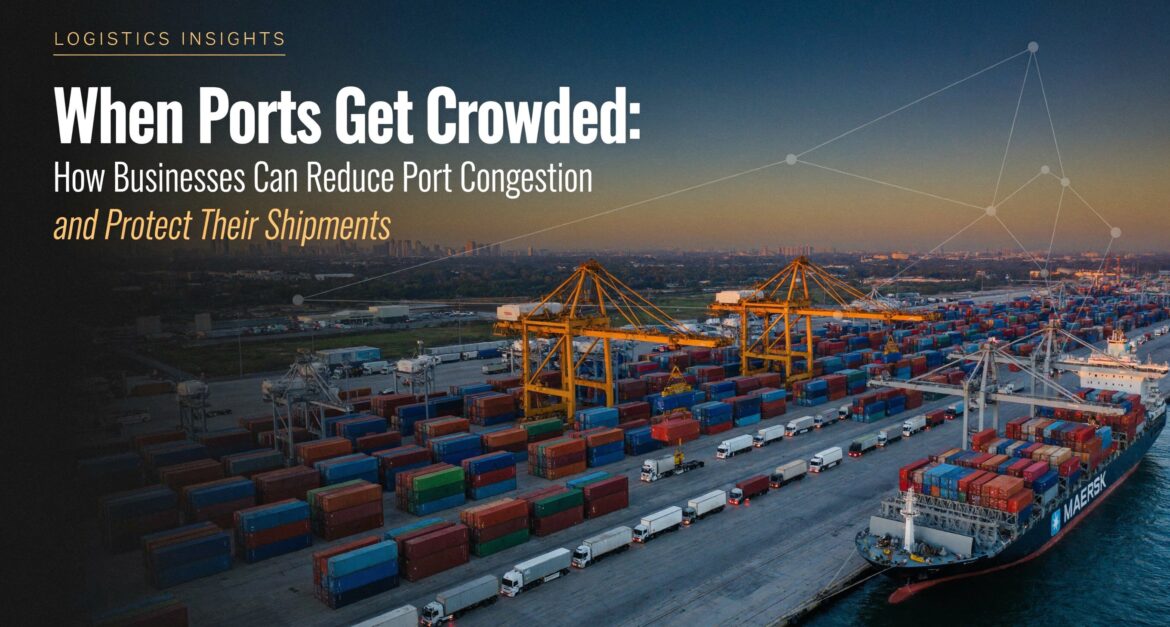
dsrePicture a container ship arriving at a busy port after weeks at sea. Instead of heading straight to a berth, it waits at anchor for days. When it finally unloads, containers pile up in the yard, trucks queue at the gate, and your cargo sits in a stack somewhere in the middle. Meanwhile, your shelves are running low and your customers are asking where their orders are.
That is port congestion, and it is one of the most expensive hidden risks in international trade. This guide explains what it is, what causes it, how it hits businesses, and what you can do about it. It covers lessons from the well-known West Coast congestion in North America and practical steps for companies shipping into Saudi Arabia.
Fun fact: Roughly 90% of world trade by volume moves by sea, according to commonly cited industry figures. When ports slow down, almost every sector feels it, from electronics and clothing to food and medicine.
What Is Port Congestion and Why Does It Matter?
Port congestion happens when more ships and cargo arrive at a port than it can process in a normal time. Vessels wait for berths, containers wait for unloading, and trucks wait for pickup. The delays spread through the whole logistics chain.
Signs of congestion include:
- Ships waiting at anchor outside the port
- Containers staying in the yard for longer than usual
- Long truck queues at terminal gates
- Chassis, container, or equipment shortages
- Extended customs and inspection times
Why It Matters
- Time: Cargo that should take days to clear can take weeks.
- Money: Delays trigger demurrage, detention, storage, and extra transport charges.
- Customers: Late deliveries damage trust and can cost you contracts.
- Planning: Unpredictable lead times make it hard to manage stock and production.
Port congestion is a business problem, not only a shipping-industry one.
What Causes Port Congestion in International Shipping?
Congestion rarely has one cause. It usually results from several pressures hitting at once.
High Cargo Volumes and Seasonal Shipping Demand
When demand surges, ports can be overwhelmed. Common peaks include:
- Pre-holiday retail seasons
- Ramadan and Eid preparation periods in the Middle East
- New-year and festival-related manufacturing slowdowns and restarts in Asia
- Sudden e-commerce booms
When many shippers move goods at the same time, even a well-run port can fall behind.
Customs Clearance Delays and Documentation Errors
Cargo cannot leave the port until it is cleared. Common causes of hold-ups:
- Missing, incorrect, or mismatched documents
- Wrong product classification codes (HS codes)
- Incomplete conformity or licensing paperwork
- Inspections or additional checks
- Late payment of duties or fees
A single mistake can keep a container sitting in the yard and taking space that others need.
Limited Port Infrastructure and Container Handling Capacity
Ports have limits on berths, cranes, yard space, and gate capacity. If ships get larger or cargo volumes grow faster than the infrastructure, bottlenecks appear. Even strong ports can struggle when yard stacking becomes too dense and equipment movement slows down.
Labor Shortages and Equipment Disruptions
Port operations depend on crane operators, truck drivers, dockworkers, and technicians. Problems that cause delays include:
- Staff shortages or schedule gaps
- Strikes or labor disputes in some regions
- Crane or equipment breakdowns
- Shortages of trucks, chassis, or empty containers
- Severe weather interrupting operations
Poor Coordination Between Shipping Lines and Logistics Providers
Even with enough capacity, poor communication causes waste. Examples:
- Vessels arriving off schedule with little notice
- Containers not released on time
- Trucks arriving before cargo is ready (or after the free time expires)
- No shared visibility between carriers, terminals, brokers, and warehouses
Better coordination can ease congestion without adding one extra crane.
Fun fact: In 2021, at the peak of North American West Coast congestion, dozens of container ships were seen waiting off the Los Angeles and Long Beach coast at one time, a sight that made global news and became a symbol of supply chain strain.
How Port Congestion Affects Businesses and Supply Chains
Longer Shipping Times and Delivery Delays
Waiting at anchor, slow unloading, and delayed trucking all add days to the journey. Transit times become unpredictable, which affects production schedules, retail launches, and promotions.
Higher Transportation, Storage, and Demurrage Costs
Delays are expensive. Typical costs include:
- Demurrage: fees charged when containers stay in the terminal beyond free time
- Detention: fees for keeping carrier-owned containers outside the port too long
- Storage charges: fees for extra days in the yard or warehouse
- Rebooking and rerouting: extra costs when cargo is diverted
- Expedited freight: air or priority shipping to make up for lost time
The chart below shows an illustrative example of how costs can build up for one container as delays grow. Actual fees depend on port, carrier, and contract terms, so always check your own rate agreements.
The key lesson from this model is that costs often rise faster the longer cargo sits, so acting early matters far more than reacting late.
Inventory Shortages and Disrupted Business Operations
When shipments don’t arrive, stock runs out. Retailers lose sales, manufacturers pause production, and distributors cannot fill orders. Shortages also push companies into emergency buying at higher prices.
Reduced Supply Chain Visibility and Customer Satisfaction
Customers expect clear delivery dates. During congestion, many businesses can’t give them one. The result is more complaints, more cancellations, and weaker trust, especially in retail and e-commerce where reliability is a selling point.
How to Avoid West Coast Port Congestion
The U.S. and Canadian West Coast ports, such as Los Angeles, Long Beach, Oakland, Seattle-Tacoma, and Vancouver, became the textbook example of congestion. If your supply chain touches these ports, these steps help.
Plan Shipments Around Peak Port Traffic
- Avoid shipping into peak retail and holiday windows when possible
- Move goods earlier in the season
- Watch for labor negotiations or known disruptions
- Build extra lead time into your calendar
Consider Alternative Ports and Shipping Routes
- Look at other West Coast ports with lower traffic
- Evaluate East Coast or Gulf Coast routes if cost and timing make sense
- Compare all-water routes with intermodal options
- Weigh the full landed cost, not just ocean freight rates
Book Cargo Space in Advance
- Reserve container space well ahead during busy periods
- Use contracts or service agreements with carriers where practical
- Confirm equipment availability and pickup windows early
Work with Experienced Freight Forwarders
A good freight forwarder offers:
- Knowledge of port conditions and carrier performance
- Alternative routing options when plans change
- Help with documentation and customs
- Faster problem-solving when delays appear
Monitor Port Conditions and Shipment Updates
- Track vessel schedules and port wait times
- Set alerts for delays or rolling bookings
- Review terminal advisories and gate notices
- Stay in regular contact with your forwarder and carrier
Practical Strategies to Reduce Port Congestion Risks in Saudi Arabia
Saudi Arabia has major ports on both coasts, including Jeddah Islamic Port and King Abdulaziz Port in Dammam, along with others such as Jubail, Yanbu, and Jazan. The Kingdom is investing heavily in port and logistics infrastructure as part of Vision 2030, but demand is growing too. Smart planning still protects your cargo.
Fun fact: Saudi Arabia sits between the Red Sea and the Arabian Gulf, giving it ports on two very different trade corridors. That geography gives importers real flexibility, if they plan for it.
Prepare Customs Documents Before Cargo Arrival
Most avoidable delays start with paperwork. Before the vessel arrives:
- Verify the commercial invoice, packing list, and bill of lading match exactly
- Confirm correct HS codes and product descriptions
- Arrange required conformity certificates in advance (for example, through the SASO Saber platform where applicable) and any SFDA approvals for regulated goods
- Make sure Arabic labeling and other product requirements are met
- Submit declarations through the relevant systems, such as FASAH, as early as allowed
- Pre-arrange payment of duties and fees
Use Alternative Saudi Ports When Operationally Suitable
- Compare Jeddah, Dammam, and other ports against your final delivery location
- Consider where your customers and warehouses are, not only the cheapest port
- Ask your forwarder about current wait times, berth availability, and inland connections
- Keep a backup port option in your plan, even if you rarely use it
Coordinate Inland Transportation and Container Pickup
Many demurrage charges happen because the truck wasn’t ready. To prevent that:
- Book trucks before the container is released
- Sync pickup appointments with customs clearance status
- Make sure warehouse receiving slots are available
- Use fleet tracking to monitor trucks from the port to the warehouse
- Return empty containers within the allowed window
Maintain Safety Stock for Critical Products
- Identify fast-moving or essential items
- Hold a buffer based on how variable your lead times are
- Store stock close to demand centers
- Review safety stock before seasonal peaks like Ramadan, Eid, and back-to-school
Safety stock isn’t wasted money. It’s insurance against delay.
How Technology Helps Businesses Manage Port Congestion
Real-Time Cargo Tracking and Port Updates
- Container tracking from loading to delivery
- Vessel position and estimated arrival updates
- Alerts for schedule changes or delays
- Visibility of free-time countdowns to avoid fees
Predictive Analytics for Shipment Planning
- Historical port data can reveal seasonal patterns
- Forecasting tools help predict likely wait times
- Planners can adjust order timing and inventory levels
- Scenario planning shows the cost of different routing choices
Digital Documentation and Customs Coordination
- Electronic documents reduce paperwork errors
- Shared platforms let brokers, forwarders, and importers see the same information
- Faster submission and approval speeds up clearance
- Digital records simplify audits and dispute handling
Technology doesn’t remove congestion, but it gives you the earlier warning and faster response that protect your shipments.
Port Congestion vs Shipping Delays: Understanding the Difference
People often use these terms as if they were the same. They aren’t.
| Factor | Port Congestion | Shipping Delays |
| Definition | Overload of cargo or vessels at a port | Any lateness in a shipment’s journey |
| Scope | A specific port or terminal | Can happen anywhere along the route |
| Typical causes | High volume, limited capacity, labor or equipment issues | Weather, mechanical issues, customs holds, routing changes, congestion |
| Duration | Can last days to months | Can be brief or long |
| Visible signs | Ship queues, packed yards, truck lines | Missed ETAs, rolled bookings |
| Relationship | One cause of shipping delays | A broader result with many possible causes |
In short: port congestion is one common cause of shipping delays, but not every delay is congestion. Knowing the difference helps you choose the right fix.
How to Build a Resilient Shipping Strategy During Port Congestion
Resilience means your business keeps running even when ports don’t. Build it in layers.
- Diversify routes and ports. Don’t depend on a single gateway.
- Work with more than one carrier. Spread risk across service providers.
- Add buffer time. Build realistic lead times into purchase and production plans.
- Keep documents clean and early. Treat paperwork as part of the shipment, not an afterthought.
- Hold strategic inventory. Safety stock for key products protects sales.
- Use nearby warehousing. Storage close to the port or customer lets you take delivery quickly and release containers on time.
- Connect transport and warehouse plans. Align trucks, dock appointments, and storage space.
- Review performance regularly. Track dwell time, demurrage costs, and on-time arrival, then adjust.
Freight Forwarder Only vs Integrated Logistics Partner
| Factor | Freight Forwarder Only | Integrated Logistics Partner |
| Focus | Booking and moving cargo to destination | End-to-end flow from port to warehouse to delivery |
| Strengths | Carrier relationships, route options | Coordination of storage, transport, and distribution |
| Gap | May hand off cargo once it clears | Aims to cover handoffs after clearance |
| Best for | Simple point-to-point shipments | Businesses needing stock, distribution, and delivery control |
Many businesses benefit from both: a strong forwarder for the ocean leg and a partner who manages what happens after the cargo lands.
How Palm Horizon KSA Helps Businesses Manage Shipping Delays
Palm Horizon KSA helps businesses in Saudi Arabia keep goods moving once they reach the Kingdom. While ports and carriers handle the ocean leg, the steps after arrival often decide whether a delay becomes a costly problem.
Businesses can look to Palm Horizon KSA for support such as:
- Warehousing and storage so cargo can be received quickly and containers released on time
- Distribution and retail-ready preparation to move goods onward to stores and customers
- Transportation and fleet coordination to keep trucks aligned with pickup windows
- Inventory visibility to help you plan around shipping variability
- Planning support for businesses expanding or importing into Saudi Arabia
The goal is to give you smoother handoffs, fewer idle days, and more control when the port side of your supply chain is under pressure.
Importing into Saudi Arabia and worried about delays? Contact Palm Horizon KSA to talk about how to protect your shipments after they arrive.
Frequently Asked Questions About Port Congestion
What Is Port Congestion in Shipping?
Port congestion occurs when a port receives more vessels and cargo than it can process efficiently. This causes ships to wait for berths, containers to sit in yards, and trucks to queue at gates, which delays the movement of goods through the supply chain.
What Causes Port Congestion?
Common causes include high seasonal cargo volumes, customs clearance delays, limited port capacity, labor or equipment shortages, bad weather, and poor coordination among shipping lines, terminals, and logistics providers. Often several causes combine.
How Can Businesses Avoid West Coast Port Congestion?
Plan shipments around peak periods, consider alternative ports or routes, book cargo space early, work with experienced freight forwarders, and monitor port conditions and shipment updates closely. Comparing total landed cost, not just freight rates, also helps.
How Does Port Congestion Affect Shipping Costs?
Congestion raises costs through demurrage, detention, storage fees, rebooking, and sometimes expedited freight. It can also increase carrier surcharges and cause lost sales when stock is late. Costs tend to rise the longer cargo is stuck.
How Can Businesses Reduce Port Congestion Delays When Shipping to Saudi Arabia?
Prepare customs documents before arrival, check conformity and labeling requirements early, consider alternative Saudi ports where suitable, arrange trucks and warehouse space ahead of container release, and keep safety stock for critical products. Working with a local logistics partner helps coordinate these steps.
What Is Demurrage, and How Can I Avoid It?
Demurrage is a fee charged when a container stays in the terminal beyond its free time. You can avoid it by clearing customs quickly, arranging transport in advance, and making sure your warehouse is ready to receive the goods.
Is Port Congestion Predictable?
Partly. Seasonal peaks, holidays, and known disruptions can be anticipated, but sudden events like equipment failures or weather can’t. This is why buffer time and flexible routing are valuable.
Conclusion: Protect Your Shipments Before the Queue Forms
Port congestion isn’t something a single business can fix, but it is something a business can prepare for. The companies that cope best aren’t lucky. They plan earlier, document more carefully, keep backup options ready, and coordinate every step from the vessel to the warehouse to the customer.
Whether you ship through crowded West Coast terminals or import into Saudi Arabia’s busy Red Sea and Gulf ports, the same principle holds: small improvements in preparation prevent large costs in delay. Clean paperwork, flexible routing, smart inventory buffers, and strong local logistics support turn a crowded port from a crisis into a manageable event.
If you want a partner who helps keep your goods moving after they land, Palm Horizon KSA is ready to support you.
Take the next step: Contact Palm Horizon KSA today to discuss how to reduce shipping delays and protect your supply chain.