
Introduction to Shipping from China to Saudi Arabia
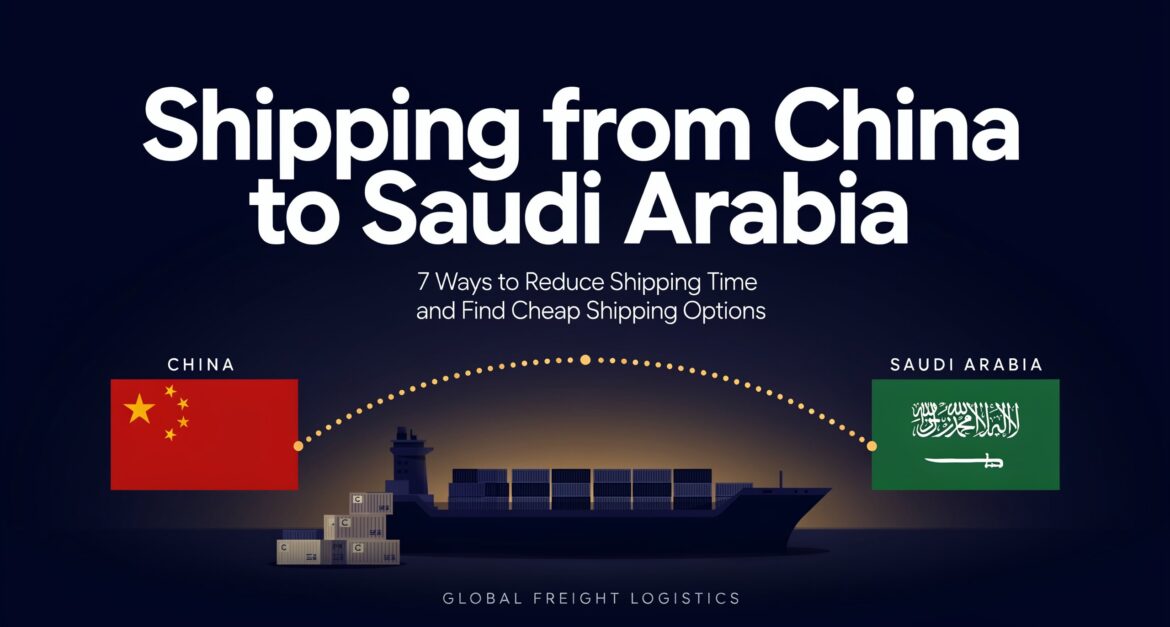
China manufactures it, Saudi Arabia needs it. From construction materials and electronics to apparel, spare parts and consumer goods, a huge share of what lands in Saudi warehouses starts life in a Chinese factory. That makes shipping from China to Saudi Arabia one of the most important trade lanes for importers in the Kingdom.
It is also a lane where small mistakes get expensive. A missed SABER certificate can stall a container. A wrong HS code changes your duty. A last-minute booking pays peak rates. And quoted transit times often differ by a week or more depending on who you ask, because routes, ports, carriers and customs readiness all matter.
This guide answers the questions importers ask most: How long does shipping take? What is the cheapest way to ship? Is air or sea better? What does customs actually require? It also lays out seven practical ways to shorten delivery times and keep costs under control, with a checklist you can use before every shipment. At Palm Horizon KSA, these are the questions we hear daily from importers, so the advice is built around real shipment decisions.
Fun fact: A standard 20-foot container holds roughly 33 cubic metres and a 40-foot container about 67. When a supplier says your cargo is “just a little over a container,” the next step up in cost can be steep.
Understanding Shipping from China to Saudi Arabia
Popular Shipping Routes from China to Saudi Arabia
Most cargo moves by sea from major Chinese export hubs to three Saudi gateways:
| Saudi port | Coast | Best suited for |
| Jeddah Islamic Port | Red Sea | Western region, Makkah, Madinah, Red Sea projects |
| King Abdullah Port | Red Sea | Industrial cargo, northern Jeddah corridor |
| King Abdulaziz Port (Dammam) | Arabian Gulf | Eastern Province, Riyadh via road or rail, industrial cargo |
Chinese origin ports commonly used include Shenzhen and Guangzhou in the south, Shanghai and Ningbo in the east, and Tianjin and Qingdao in the north. Southern ports generally offer the fastest connections to the Red Sea, while eastern ports have strong links to Dammam.
Two route families:
- Red Sea route (to Jeddah): China, Strait of Malacca, Indian Ocean, Bab el-Mandeb, Red Sea.
- Gulf route (to Dammam): China, Strait of Malacca, Indian Ocean, Strait of Hormuz, Arabian Gulf.
Current conditions matter. An October 2026 freight briefing reported that Hormuz was shut to container ships, which pushed some services through other Indian and South East Asian ports. Conditions like this change quickly, so confirm the status of your Gulf routing with your carrier or forwarder before you commit to Dammam. Importers sometimes land cargo at a Red Sea port and move it inland instead.
Air freight, express couriers and, for some cargo, road and rail legs complete the picture.
What Products Are Commonly Shipped From China to Saudi Arabia?
Saudi importers tend to bring in:
- Electronics and electrical goods: phones, appliances, LED lighting, solar components
- Machinery and spare parts: industrial equipment, auto parts, tools
- Construction and building materials: tiles, steel products, fittings, cables
- Furniture and home goods
- Apparel, textiles and footwear
- E-commerce and consumer goods: accessories, toys, beauty tools, small gadgets
- Packaging and industrial supplies
Product type matters because it decides the shipping method, the duty rate, whether SABER certification applies, and whether any special permits are needed.
Shipping Time From China to Saudi Arabia
How Long Does Sea Freight Take From China to Saudi Arabia?
You will see a range of numbers online, and they genuinely differ. Here is what published sources say about port-to-port sea transit:
| Source type | Reported sea freight time |
| Forwarder A (October 2026 guide) | FCL 14 to 20 days; LCL 10 to 15 days |
| Forwarder B | FCL 16 to 22 days; LCL 18 to 25 days (by port) |
| Forwarder C | FCL 18 to 28 days; LCL 22 to 32 days |
| Forwarder D | 20 to 25 days |
| Other guides | 25 to 35 days, up to 40 or 45 days for LCL or northern origins |
A realistic planning range: most importers should plan for about 20 to 35 days port-to-port, and add time for customs clearance and inland delivery. One forwarder suggests adding 1 to 3 days for Saudi clearance and 2 to 5 days for delivery to Riyadh or other inland cities.
Why the spread? Direct versus transshipment services, origin port, season, carrier schedules, and congestion all change the number. LCL usually takes longer than FCL because cargo has to be consolidated and deconsolidated.
How Long Does Air Freight Take From China to Saudi Arabia?
Air is much faster. Published figures put it at about 3 to 7 days, with some routes at 3 to 5 days airport-to-airport. Express couriers run roughly 2 to 6 days. Door-to-door timing depends on pick-up, export clearance, flight availability and import clearance.
Factors That Affect Shipping Time From China to Saudi Arabia
- Origin and destination ports: distance and service frequency differ.
- Direct vs transshipment: transshipment adds handling and waiting.
- Port congestion: vessel waiting times and yard dwell can add days. Global congestion is high right now; around 12% of container ship capacity has been reported tied up in port congestion.
- Season and holidays: Chinese Golden Week and New Year, plus pre-Ramadan and year-end demand.
- Documentation and compliance: missing certificates or wrong declarations stop cargo at the border.
- Cargo type: dangerous goods, oversized cargo and regulated products take longer.
- Inland transport: truck availability and delivery appointments.
Fun fact: Delay does not only come from the sea. Product certification, such as SABER, is one of the most common reasons shipments lose time, because the paperwork has to be right before the cargo ships.
Cheap Shipping From China to Saudi Arabia: How to Reduce Costs
“Cheap” should mean lowest total cost for the service level you need, not the lowest headline freight rate. These seven steps cut both time and cost.
1. Choose the Right Shipping Method
Match the method to your cargo’s value, weight and urgency.
- Sea freight: best for heavy, bulky or lower-value goods.
- Air freight: best for high-value, urgent or lightweight cargo.
- Express courier: best for samples and small parcels.
Paying for air on slow-moving stock wastes money. Waiting weeks for sea freight on a fast-moving item loses sales. Many importers combine both: sea for base stock, air for top-ups.
2. Consolidate Smaller Shipments
If you buy from several suppliers, ask your forwarder to consolidate cargo at a Chinese warehouse into one shipment. That usually means one set of freight and handling charges, one customs entry and fewer pick-ups. Consolidation is especially valuable for importers whose suppliers are all in the same region.
3. Compare Multiple Shipping Quotations
Request at least three quotes, and make them comparable. Ask each provider to itemise:
- Origin charges (pick-up, export clearance, terminal fees)
- Main freight
- Destination charges (port, terminal handling, delivery order)
- Customs clearance fees
- Inland delivery
- Insurance
- Validity date of the rate
Rates move weekly. A dated, line-by-line quote lets you compare real totals instead of marketing numbers.
4. Plan Shipments in Advance
Last-minute bookings cost more and offer fewer sailing choices. Plan around peak periods and holidays, and book space early for seasonal goods. Early planning also gives you time to sort SABER certificates and documents without paying for rush air freight later.
5. Optimize Packaging and Cargo Dimensions
You pay for space and weight, so use both wisely.
- Sea freight: pack to use the full container volume, and avoid oversized cartons that waste space.
- Air freight: carriers charge on the greater of actual or volumetric weight, so lighter, compact packaging saves money.
- Use palletisation and strong cartons to reduce damage and claims.
- Ask the supplier for accurate carton dimensions and weights before booking.
6. Avoid Documentation and Customs Delays
Delays cost money through storage, demurrage and detention charges. Prepare documents before the cargo sails, double-check HS codes, and confirm certificates in advance. Clean paperwork is the cheapest speed-up available.
7. Work With a Reliable Logistics Partner
An experienced partner pulls the pieces together: freight booking, consolidation, SABER guidance, customs clearance, inland delivery and tracking. Palm Horizon KSA supports importers across these steps so one team can coordinate the chain from origin to final delivery.
Air Freight vs. Sea Freight: Which Is Better for Shipping From China to Saudi Arabia?
| Factor | Air freight | Sea freight |
| Typical transit time | About 3 to 7 days | About 20 to 35 days port-to-port |
| Cost per kg | Higher | Much lower for heavy cargo |
| Best for | High-value, urgent, light cargo | Bulky, heavy, lower-value cargo |
| Capacity | Limited | Very high |
| Reliability | Frequent flights, tighter cut-offs | Exposed to port congestion and route disruptions |
| Handling risk | Less handling time | More handling steps |
Air Freight From China to Saudi Arabia
And air suits electronics, spare parts that stop production when missing, fashion drops and launch inventory. Major flows run from airports like Shanghai, Guangzhou, Shenzhen and Hong Kong into Jeddah, Riyadh and Dammam. Watch chargeable weight, because bulky but light cartons can cost far more than expected.
Sea Freight From China to Saudi Arabia
Sea is the backbone of volume trade. It offers the best cost per unit for heavy goods and supports projects, wholesale stock and building materials. The trade-off is time and exposure to port congestion and route changes.
Full Container Load vs. Less Than Container Load
| FCL | LCL | |
| What it is | You rent the entire container | You share a container with other shippers |
| Best for | Larger volumes (roughly above 15 to 25 CBM, depending on provider) | Smaller volumes |
| Cost logic | Fixed price per container | Priced per CBM or per tonne |
| Transit time | Usually shorter | Usually longer because of consolidation |
| Handling | Less, so lower damage risk | More, so higher damage risk |
| Control | Full control of loading | Shared schedules |
Rule of thumb: as your volume approaches the mid-teens in cubic metres, get an FCL quote. It can match or beat LCL costs while being faster and safer.
Fun fact: In air freight, the airline charges for whichever is larger: the real weight or the “volume weight” worked out from the box dimensions. A big box of pillows can cost more to fly than a small box of metal parts that weighs ten times as much.
Shipping Costs From China to Saudi Arabia
Main Factors That Affect Shipping Costs
- Mode: air, sea or express
- Shipment size and weight: CBM, tonnes, container size
- FCL vs LCL
- Origin and destination ports
- Season and market conditions: rates swing with demand, capacity and congestion
- Type of cargo: dangerous goods, oversized and temperature-controlled cargo cost more
- Service level: port-to-port, door-to-door or DDP (delivered duty paid)
- Surcharges: fuel, congestion, peak season, war-risk or route-related charges
- Customs and compliance costs: duties, VAT, SABER fees, inspection
- Insurance
- Storage and demurrage: extra if cargo is delayed
On current rates: one forwarder’s October 2026 update reports sea freight rates into Jeddah and Dammam falling by about 19% from September, but that figure comes from a single provider and can change weekly. Always get a fresh, dated quote.
How to Calculate the Total Landed Cost
Landed cost is the full price of getting goods to your door. A simple formula works for most shipments:
- CIF value = Goods (FOB) + Freight + Insurance
- Customs duty = CIF value × duty rate
- VAT = (CIF value + customs duty) × 15%
- Landed cost = CIF + duty + VAT + local costs (clearance, port, inland delivery)
Worked example (illustrative): Goods worth SAR 100,000, freight and insurance of SAR 8,500, duty at 5%.
- CIF = SAR 108,500
- Duty (5%) = SAR 5,425
- VAT base = SAR 113,925; VAT (15%) = SAR 17,089
- Taxes total = about SAR 22,514
- Landed cost before local costs = about SAR 131,014
(Chart above: the build-up of the example.)
Two important notes:
- Duty rates depend on your HS code, and many goods are charged 5%, but some are higher, lower or zero.
- VAT-registered importers can typically reclaim import VAT as input tax, which changes your real cash cost but not your cash-flow need at the border. Ask your accountant.
Fun fact: Because VAT is charged on the duty-inclusive value, you effectively pay VAT on the duty too. That is why a “5% duty” import ends up costing well over 20% more at the border than the goods and freight alone.
Customs Clearance for Shipping From China to Saudi Arabia
Essential Documents for Importing Goods From China
Exact requirements depend on your goods, but plan for:
- Commercial invoice (with accurate descriptions, values and HS codes)
- Packing list
- Bill of lading (sea) or air waybill (air)
- Certificate of origin, where required
- SABER certificates (PCoC and SCoC) or a declaration of conformity, for applicable products
- Importer registration details, because Saudi customs generally requires an importer of record with local registration
- Special permits or approvals for regulated goods, such as food, medical products, chemicals or telecom equipment
- Insurance certificate, if applicable
Make sure names, quantities, values and descriptions match across every document. Mismatches are a classic reason for customs queries.
Understand HS Codes and Customs Duties
The HS code classifies your product, and it drives the duty rate, the SABER technical regulation that applies, and sometimes extra permits. A wrong code can mean overpaying, underpaying, delays or penalties.
- Ask the supplier for the HS code, then verify it with your customs broker.
- Use the Saudi tariff, not only the Chinese export code, since the codes can differ after the first six digits.
- Keep product specifications ready to justify the classification.
As for thresholds, you may see a SAR 1,000 low-value threshold mentioned in guides, but sources describe VAT treatment differently. Check the current position with ZATCA or your broker before relying on it for commercial shipments.
Check SABER and Product Compliance Requirements
SABER is the electronic platform run by the Saudi Standards, Metrology and Quality Organization (SASO), through which importers register products and obtain conformity certificates before goods reach the Kingdom. The system works like this:
- Register your company and products on SABER, with HS codes.
- Product Certificate of Conformity (PCoC): for regulated products, a SASO-approved conformity assessment body reviews documents and, where needed, test reports. PCoCs are generally valid for one year.
- Shipment Certificate of Conformity (SCoC): issued per shipment, based on a valid PCoC.
- Non-regulated products: typically need a self-declaration of conformity (sDoC).
Without the right certificate, a shipment can be held, and older guidance notes that cargo lacking an SCoC may have to be re-exported. SABER is linked to the FASAH customs system, and import VAT processes are tied into the system as well. Allow lead time, because certification has to be done before shipping.
Other regulators may also apply, such as SFDA for food, medical and cosmetic products, and CST for telecom equipment.
Common Challenges When Shipping From China to Saudi Arabia
Delayed Shipments
Causes include port congestion, rolled bookings, blank sailings, route changes and customs holds. Fix: book early, track actively, and keep buffer stock.
Unexpected Shipping Costs
Surprises usually come from destination charges, demurrage, storage, surcharges or inspections. Fix: insist on itemised quotes and ask what is not included.
Incorrect Shipping Documents
Wrong HS codes, mismatched values or missing certificates are the most common causes. Fix: verify documents before the cargo ships, and ask your broker to review drafts.
Cargo Damage During Transportation
LCL consolidation, poor packaging and multiple handling steps raise the risk. Fix: use strong cartons and pallets, mark fragile goods, and buy cargo insurance.
Limited Shipment Visibility
Without tracking, you learn about problems after they happen. Fix: choose partners who provide milestone updates and a named contact.
How to Choose the Right Logistics Partner for Shipping From China to Saudi Arabia
Check International Shipping Experience
Look for experience on the China to Saudi lane, in your product category and with Saudi customs. Ask for examples, not just claims.
Compare Service Coverage
Can they handle sea, air, consolidation, customs clearance, warehousing and delivery? One partner covering the chain reduces handover gaps.
Review Pricing Transparency
Good providers explain what is included and what is not. Be wary of rates that look unusually low with no breakdown.
Ask About Shipment Tracking
You should see key milestones, such as departure, arrival, customs status and delivery, without chasing.
Evaluate Customer Support
Check response times, working hours, language support (Arabic and English) and escalation paths. Test this before you sign.
Palm Horizon KSA focuses on the Saudi end of the chain, from clearance and storage to distribution, which matters when most delays and costs show up at the border and on the road
Shipping From China to Saudi Arabia: A Practical Import Checklist
- Before you buy
- [ ] Confirm the product’s HS code and duty rate
- [ ] Check whether SABER, SFDA or other approvals apply
- [ ] Confirm your importer registration is valid
- [ ] Ask the supplier for accurate carton sizes and weights
2. Before booking
- [ ] Compare air, sea and express for your cargo
- [ ] Decide FCL or LCL based on volume
- [ ] Get at least three itemised quotes
- [ ] Check port conditions and routing, including any Gulf or Red Sea issues
- [ ] Book early for peak seasons and holidays
3. Before shipping
- [ ] SABER PCoC and SCoC in place, or sDoC where applicable
- [ ] Commercial invoice, packing list and transport document checked for consistency
- [ ] Certificate of origin ready if required
- [ ] Cargo packed and labelled properly
- [ ] Insurance arranged
4. During transit
- [ ] Track milestones and ETA changes
- [ ] Share arrival documents with your customs broker early
- [ ] Pre-book trucking and warehouse space
5. On arrival
- [ ] Duties and VAT arranged
- [ ] Clearance completed and cargo released
- [ ] Delivery scheduled and containers returned on time
6. After delivery
- [ ] Reconcile landed cost against the quote
- [ ] Record transit times and delays
- [ ] Share lessons with your logistics partner
Frequently Asked Questions About Shipping From China to Saudi Arabia
How Long Does Shipping From China to Saudi Arabia Take?
Sea freight typically takes about 20 to 35 days port-to-port, though some services quote 15 to 25 days and LCL or northern origins can take 40 days or more. Air freight takes about 3 to 7 days, and express couriers about 2 to 6 days. Add time for customs clearance and inland delivery.
What Is the Cheapest Way to Ship From China to Saudi Arabia?
For most commercial cargo, sea freight is the cheapest per unit, especially FCL for larger volumes and LCL for smaller ones. You cut costs further by consolidating shipments, booking early, comparing itemised quotes, optimising packaging and avoiding customs delays.
Is Air Freight Faster Than Sea Freight From China to Saudi Arabia?
Yes. Air takes days instead of weeks. It costs more per kilogram, so it suits urgent, high-value or lightweight goods, while sea suits heavy and bulky cargo.
What Documents Are Required for Shipping From China to Saudi Arabia?
Typically a commercial invoice, packing list, bill of lading or air waybill, certificate of origin where required, SABER conformity certificates for applicable products, importer registration details and any special permits for regulated goods.
Can I Ship Small Quantities From China to Saudi Arabia?
Yes. Options include LCL sea freight, air freight, express courier and consolidated shipments with a forwarder. Small shipments still need correct documents, HS codes and, where applicable, product compliance.
What Affects the Cost of Shipping From China to Saudi Arabia?
Mode, volume and weight, FCL or LCL, origin and destination ports, season, surcharges, cargo type, service level (port-to-port or door-to-door), customs duties and VAT, SABER and compliance fees, insurance and any storage or demurrage.
Do I Need SABER Certification to Import Goods From China?
For most consumer products entering Saudi Arabia, yes: products and shipments are registered and certified through the SABER platform, with product and shipment certificates for regulated goods and a declaration of conformity for non-regulated ones. Requirements depend on your HS code, so confirm with a customs specialist before you ship.
What Is the Difference Between FOB, CIF and DDP?
FOB means the seller delivers the goods onto the ship at the Chinese port; you arrange the freight. CIF includes freight and insurance up to the Saudi port. DDP means the seller or provider delivers to your door with duties paid. Each changes who pays what, and the customs value in Saudi Arabia is calculated on a CIF basis.
Conclusion: Plan Smarter Shipping From China to Saudi Arabia
Shipping from China to Saudi Arabia does not have to be a guessing game. The importers who ship fastest and cheapest are rarely the ones who find a secret rate. They are the ones who prepare: they choose the right mode, consolidate cargo, compare itemised quotes, book early, pack efficiently, get certificates and documents right before the ship sails, and work with a partner who knows both ends of the lane.
Remember the three numbers that matter: transit time, landed cost and compliance readiness. If any one of them is a surprise, something went wrong earlier in the process.
If you are planning your next shipment, start with your product’s HS code, SABER status and volume, then build the plan around them.
Ready to ship from China to Saudi Arabia with fewer surprises? Contact Palm Horizon KSA for an itemised quote, customs guidance and a delivery plan tailored to your cargo.