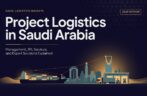

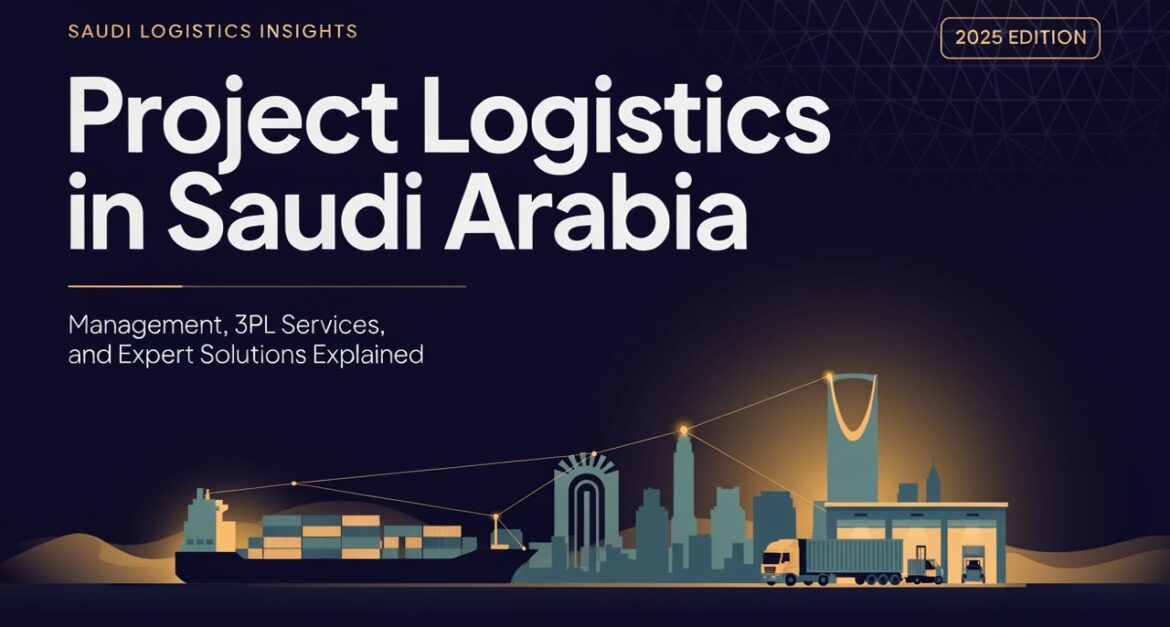
Saudi Arabia is in the middle of the biggest construction and industrial boom the Middle East has seen in decades. NEOM, the Red Sea Project, Qiddiya, new metro systems, refineries, and renewable energy plants are rising across the Kingdom at the same time. Behind every crane, turbine, and pipeline sits a problem most people never think about: how do you move a 200-ton transformer from a port in Jeddah to a construction site 600 kilometers inland, on time, undamaged, and fully compliant with Saudi customs law?
That question is the entire reason project logistics exists.
Ordinary freight shipping — pallets, containers, parcels — follows predictable routes and standard equipment. Megaprojects don’t work that way. A single delayed permit, an unsurveyed bridge that can’t support a transformer’s weight, or a missed customs document can stall a project worth hundreds of millions of riyals. In a country racing to deliver Vision 2030 targets, that kind of delay isn’t just expensive — it’s strategically costly.
This guide breaks down exactly what project logistics means, how it differs from standard freight movement, what a logistics project manager actually does day to day, and how to choose the right 3PL partner for oversized, heavy, and time-critical cargo in Saudi Arabia. Whether you’re an EPC contractor, a procurement manager, or an operations lead evaluating logistics providers, this article is built to answer the real questions you’re searching for — clearly, practically, and without the fluff.
Let’s start with the fundamentals.
What Is Project Logistics?
Project logistics is the specialized planning, coordination, and execution of transporting cargo that is too large, too heavy, too valuable, or too time-sensitive to move through conventional freight channels. It’s the backbone of construction, energy, infrastructure, and industrial development, and it’s fundamentally different from standard freight transportation in almost every way.
How project logistics differs from standard freight transportation
Standard freight moves goods in predictable, repeatable patterns — containers on trucks, boxes on pallets, parcels through hubs. Project logistics moves cargo that breaks those patterns entirely:
- Oversized cargo — modules, turbines, tanks, and structural steel that exceed standard trailer dimensions
- Heavy cargo — transformers, generators, and industrial machinery weighing anywhere from 50 to 1,000+ tons
- High-value cargo — equipment where a single shipment can represent millions of riyals in asset value
- Time-sensitive cargo — components tied directly to a construction milestone, where a delay halts an entire project phase
Because of these differences, project logistics requires custom route engineering, specialized heavy-haul trailers, cranes, escort vehicles, and government permitting — none of which apply to a standard container shipment.
Fun fact: Some of the largest single loads moved for Gulf energy projects have weighed more than 900 tons — heavier than a fully loaded Boeing 747 — and required custom-built modular trailers with over 100 individual axle lines just to distribute the weight safely across roads and bridges.
Planning and coordination of complex shipments
Every project logistics operation starts long before the cargo ever moves. Planning includes:
- Engineering surveys of the intended route (bridge load limits, tunnel clearances, road curvature)
- Weight and dimension analysis of the cargo itself
- Selection of the correct trailer configuration (modular, extendable, or self-propelled)
- Government permitting and police escort coordination
- Contingency planning for weather, road closures, or mechanical failure
The role of project logistics in construction, energy, infrastructure, and industrial projects
In Saudi Arabia specifically, project logistics underpins nearly every giga-project currently underway:
- Construction — moving precast structures, cranes, and building modules to remote sites
- Energy — transporting turbines, transformers, and pipeline sections for oil, gas, and renewable projects
- Infrastructure — delivering rail cars, bridge sections, and desalination equipment
- Industrial projects — relocating entire factory lines or processing units
Without dedicated project logistics management, these sectors simply cannot function at the scale Saudi Arabia is currently building.
What Is Logistics Project Management?
Logistics project management is the discipline of coordinating every moving part of a shipment lifecycle — transportation, warehousing, documentation, customs, equipment, timelines, and multiple suppliers — under a single, unified project plan.
Where general logistics focuses on moving goods from point A to point B, logistics project management focuses on the entire ecosystem surrounding that movement. It treats a shipment not as a transaction, but as a project with a defined scope, budget, timeline, and set of deliverables — exactly the way a construction or engineering project would be managed.
This typically involves:
- Transportation coordination — selecting the right combination of sea, land, and sometimes air freight
- Warehousing — staging cargo at ports or yards before final delivery, often for weeks or months
- Documentation — bills of lading, certificates of origin, insurance certificates, and technical specifications
- Customs management — navigating Saudi import regulations, tariff classifications, and duty exemptions for project cargo
- Equipment planning — securing cranes, low-bed trailers, and rigging equipment in advance
- Supplier coordination — synchronizing multiple vendors, manufacturers, and subcontractors who all feed into the same project timeline
In a country like Saudi Arabia, where a single giga-project can involve dozens of international suppliers shipping components from different continents, logistics project management is what keeps the entire supply chain synchronized with the construction schedule on the ground.
How Logistics and Project Management Work Together
Logistics and project management intersect at nearly every stage of a large-scale development. Understanding how they work together explains why specialized project logistics providers exist in the first place.
Project planning
Before a single truck moves, logistics teams work backward from the construction schedule to determine when each shipment needs to arrive, building a transportation plan that mirrors the project’s critical path.
Transportation scheduling
Shipments are scheduled around port congestion, seasonal weather patterns, road permit windows, and construction site readiness — not just carrier availability.
Resource allocation
Heavy-lift cranes, escort vehicles, and specialized trailers are limited resources in any market. Effective logistics and project management ensures the right equipment is reserved before it’s needed, not after.
Risk management
Every project shipment carries risk — route obstructions, customs delays, equipment breakdowns. Strong logistics management builds in buffers and contingency routes to absorb these risks without derailing the project.
Cost control
Because oversized shipments are expensive by nature, cost control depends on accurate upfront planning: right-sizing equipment, minimizing idle storage time, and avoiding costly last-minute route changes.
Communication between stakeholders
Contractors, freight forwarders, customs brokers, government authorities, and site engineers all need real-time visibility into shipment status. Miscommunication is one of the leading causes of project delays.
Monitoring project milestones
Logistics teams track shipments against project milestones — not just delivery dates — so that a piece of equipment doesn’t arrive before the site is ready, or worse, after the installation window has closed.
What Does a Logistics Project Manager Do?
A logistics project manager is the single point of accountability for moving project cargo from origin to final site placement. Their responsibilities span planning, execution, and problem-solving across the entire shipment lifecycle.
Core responsibilities include:
- Creating logistics plans — developing a full transportation strategy aligned with the project’s construction schedule
- Coordinating carriers and suppliers — managing relationships with shipping lines, trucking companies, and equipment vendors
- Managing shipment schedules — sequencing deliveries so components arrive exactly when the site needs them
- Handling permits and documentation — securing oversized-load permits, customs paperwork, and route approvals from Saudi authorities
- Monitoring costs — tracking budgets against actual freight, storage, and handling expenses
- Managing project risks — identifying potential delays before they happen and building contingency plans
- Tracking cargo — maintaining real-time visibility on shipment location and condition
- Resolving transportation issues — reacting quickly to breakdowns, route closures, or weather disruptions to keep the project on schedule
In practice, a logistics project manager acts as the bridge between the engineering team that designed the cargo and the field team that needs it delivered — translating technical requirements into an executable transportation plan.
What Are Saudi Advanced Project Logistics Services?
Saudi advanced project logistics services refer to the specialized capabilities required to move oversized, heavy, and high-value cargo across the Kingdom’s ports, highways, and industrial zones. These services go well beyond standard freight forwarding and are built specifically around the demands of megaprojects.
Key components of advanced project logistics services in Saudi Arabia include:
- Heavy-lift transportation — moving cargo that exceeds standard weight limits using modular trailers and multi-axle configurations
- Oversized cargo movement — transporting loads that exceed standard height, width, or length restrictions
- Specialized equipment — cranes, hydraulic gantries, self-propelled modular transporters (SPMTs), and rigging systems
- Route surveys — physical and engineering assessments of proposed transport routes to confirm bridge, tunnel, and road capacity
- Freight forwarding — coordinating international sea and air freight into Saudi ports and airports
- Customs clearance — navigating Saudi Customs (ZATCA) documentation, duty classifications, and import regulations for project cargo
- Warehousing — secure, often climate-controlled storage for high-value equipment awaiting site readiness
- Project cargo handling — specialized loading, lashing, and securing procedures for delicate or unusually shaped equipment
- Real-time shipment tracking — GPS and IoT-based visibility across the entire transport chain
- End-to-end project logistics — a single accountable partner managing the shipment from factory floor to final site placement
This is precisely the space Palm Horizon KSA operates in — providing advanced project logistics services purpose-built for Saudi Arabia’s construction, energy, and industrial sectors. From route surveys through Riyadh’s expanding infrastructure corridors to heavy-lift delivery into NEOM’s construction zones, this level of service requires local regulatory knowledge combined with genuine heavy-cargo engineering expertise — not just a fleet of trucks.
How to Choose a 3PL for Project Logistics
Choosing the wrong logistics partner on a megaproject doesn’t just cost money — it can stall an entire construction schedule. Here’s exactly how to choose a 3PL for project logistics in Saudi Arabia.
- Project logistics experience — Ask for case studies of similar cargo types and weights. Standard freight experience does not translate to heavy-lift capability.
- Saudi Arabia network and coverage — Confirm the provider has established relationships and route knowledge across the specific regions your project touches (Eastern Province, Western Corridor, NEOM, etc.).
- Specialized transportation equipment — Verify ownership or guaranteed access to modular trailers, SPMTs, and heavy cranes — not third-party subcontracted equipment with no oversight.
- Heavy and oversized cargo capabilities — Ask for maximum weight and dimension capacities the provider has actually executed, not theoretical limits.
- Customs and regulatory expertise — Saudi customs regulations for project cargo, duty exemptions, and temporary import permits are highly specific. Confirm in-house expertise, not outsourced brokerage.
- Technology and shipment visibility — Real-time GPS tracking and digital documentation reduce risk and give stakeholders confidence throughout the project.
- Safety record — Request incident history and safety certifications. Heavy-lift transportation carries real risk to personnel, cargo, and public infrastructure.
- Scalability — Confirm the provider can scale up equipment and manpower if project timelines shift or cargo volumes increase.
- Pricing transparency — Look for detailed cost breakdowns rather than lump-sum quotes that hide equipment, permit, and storage fees.
- Proven experience with similar projects — References from comparable construction, energy, or industrial clients are the strongest indicator of reliability.
7 Challenges in Project Logistics and How to Overcome Them
1. Oversized and Heavy Cargo
Non-standard dimensions and weights limit route options and require specialized equipment. Solution: Conduct engineering surveys and select modular trailer configurations before booking transport.
2. Complex Transportation Routes
Bridges, tunnels, and urban roads often can’t handle heavy-haul cargo. Solution: Physical route surveys and pre-approved alternate routes prevent last-minute rerouting.
3. Strict Project Deadlines
Construction schedules leave little room for delay. Solution: Build buffer time into the logistics plan and pre-position equipment near critical milestones.
4. Customs and Regulatory Requirements
Saudi import regulations for industrial equipment involve detailed documentation and classification rules. Solution: Work with a 3PL that has in-house customs expertise, not third-party brokers unfamiliar with project cargo.
5. Limited Infrastructure
Remote project sites — especially giga-project zones — often lack developed road networks. Solution: Coordinate with site engineers early to plan temporary access roads or staging yards.
6. Unexpected Delays
Weather, mechanical breakdowns, and port congestion are unavoidable variables. Solution: Maintain contingency routes, backup equipment, and real-time tracking to respond quickly.
7. Coordination Between Multiple Stakeholders
Manufacturers, freight forwarders, customs authorities, and site teams all need synchronized information. Solution: A single accountable logistics project manager, supported by shared digital tracking tools, keeps every stakeholder aligned.
How 3PL Providers Support Project Logistics
A specialized third-party logistics (3PL) provider acts as the central coordinator for every element of a project shipment, reducing the operational burden on contractors and project owners. This typically includes:
- Transportation — sourcing and managing the right vehicles, vessels, and heavy-lift equipment
- Warehousing — providing secure staging facilities near ports or project sites
- Freight forwarding — managing international shipping documentation and carrier relationships
- Customs clearance — handling Saudi import regulations and duty processes for project cargo
- Cargo tracking — offering real-time visibility across the full transport chain
- Documentation — managing certificates, permits, and compliance paperwork
- Carrier coordination — synchronizing multiple transport providers under one unified schedule
- Last-mile delivery — safely delivering and positioning cargo at its final site location
This is where a dedicated project logistics partner like Palm Horizon KSA becomes an operational extension of the project team itself — not just a vendor, but a coordination hub that absorbs the complexity of moving critical cargo so contractors can stay focused on construction, not customs paperwork.
Why Project Logistics Matters for Saudi Arabia’s Growing Industries
Saudi Arabia’s Vision 2030 has triggered one of the largest infrastructure investment waves in the world, and nearly every sector driving it depends on reliable project logistics:
- Construction — giga-projects like NEOM, Qiddiya, and the Red Sea Project require constant movement of heavy structural components
- Oil & gas — refinery expansions and pipeline projects depend on precise, time-sensitive equipment delivery
- Renewable energy — solar farms and wind projects require transport of turbines, panels, and substation equipment to remote desert locations
- Manufacturing — new industrial cities need factory equipment moved and installed on tight commissioning schedules
- Infrastructure — rail networks like the Saudi Landbridge and metro expansions depend on heavy-lift delivery of rail cars and track components
- Industrial projects — petrochemical and mining operations rely on continuous, coordinated equipment logistics
- Large-scale development — entire new cities require synchronized delivery of construction materials and equipment across multi-year timelines
Without a mature project logistics sector, none of these industries could scale at the pace the Kingdom’s national strategy demands.
Fun fact: NEOM alone is projected to require the movement of tens of millions of tons of construction materials and equipment over the course of its development — logistics volume comparable to supplying a mid-sized country’s entire construction industry for a decade.
How Technology Is Improving Project Logistics
Modern project logistics has moved far beyond spreadsheets and phone calls. Key technologies reshaping the industry include:
- GPS tracking — continuous location visibility for high-value, time-sensitive shipments
- IoT sensors — monitoring cargo condition, temperature, tilt, and shock during transit
- Transportation management systems (TMS) — centralized platforms coordinating carriers, routes, and schedules
- Digital documentation — reducing paperwork errors and speeding up customs processing
- Real-time visibility — giving stakeholders live shipment status instead of periodic manual updates
- Predictive analytics — forecasting potential delays based on weather, traffic, and port congestion data
- Automated reporting — generating instant status reports for project managers and site teams
These technologies don’t just improve efficiency — they reduce the human error and communication gaps that historically caused the most expensive project delays.
A simple look at project logistics complexity vs. standard freight
| Factor | Standard Freight | Project Logistics |
| Cargo weight | Up to ~25 tons | 50 to 1,000+ tons |
| Route planning | Fixed, repeatable | Custom-engineered per shipment |
| Equipment | Standard trailers/containers | SPMTs, modular trailers, cranes |
| Permitting | Minimal | Extensive government coordination |
| Documentation complexity | Low | High (technical specs, insurance, customs) |
| Tolerance for delay | Moderate | Very low — tied to construction milestones |
| Typical stakeholders involved | 2–3 | 6–10+ |
This comparison illustrates why project logistics functions as its own discipline rather than a variation of standard freight — the risk profile, planning depth, and stakeholder complexity are simply not comparable.
How to Build an Effective Project Logistics Plan
Whether you’re managing an in-house logistics function or briefing an external 3PL, an effective project logistics plan follows a consistent structure:
- Define project requirements — Establish delivery deadlines, budget constraints, and site access conditions
- Analyze cargo specifications — Document exact weight, dimensions, fragility, and handling requirements
- Select transportation modes — Determine the right combination of sea, land, and air freight
- Plan routes — Conduct physical and engineering surveys of proposed transport paths
- Identify permits and regulations — Secure oversized-load permits, customs documentation, and government approvals early
- Select logistics partners — Choose 3PL providers with verified heavy-lift and Saudi market experience
- Establish tracking and reporting — Implement GPS and digital reporting systems for full shipment visibility
- Create contingency plans — Prepare backup routes, equipment, and timelines for unexpected disruptions
- Monitor performance — Track shipments against milestones in real time
- Review and optimize — Conduct post-project reviews to refine future logistics planning
Following this structure transforms project logistics from a reactive scramble into a predictable, controllable process — exactly what large-scale Saudi developments require.
Frequently Asked Questions
What is the difference between project logistics and regular freight forwarding?
Regular freight forwarding moves standard-sized cargo through predictable, repeatable shipping routes. Project logistics handles oversized, heavy, or time-critical cargo that requires custom route planning, specialized equipment, and government permitting — making it a fundamentally more complex discipline.
Why does Saudi Arabia need specialized project logistics providers?
Saudi Arabia’s giga-projects — including NEOM, the Red Sea Project, and major energy and infrastructure developments — involve equipment far beyond the scope of standard freight. Specialized project logistics providers bring the heavy-lift equipment, route survey capabilities, and Saudi regulatory expertise required to move this cargo safely and on schedule.
How long does it take to plan a heavy-lift shipment in Saudi Arabia?
Planning timelines vary by cargo size and route complexity, but heavy-lift shipments typically require several weeks to months of advance planning to complete route surveys, secure permits, and coordinate specialized equipment.
What industries rely most on project logistics in Saudi Arabia?
Construction, oil and gas, renewable energy, manufacturing, and infrastructure development are the primary industries depending on project logistics, given their consistent need to move oversized and heavy equipment to project sites.
What should I look for when choosing a 3PL for project logistics?
Prioritize providers with proven heavy-lift experience, established Saudi Arabia route networks, in-house customs expertise, real-time tracking technology, and transparent pricing — not just general freight capability.
Can project logistics providers handle both import and domestic transportation?
Yes. A full-service project logistics provider manages the entire chain — from international freight forwarding and port clearance through to domestic heavy-haul transportation and final site delivery.
What documentation is typically required for project cargo entering Saudi Arabia?
Project cargo generally requires certificates of origin, detailed technical specifications, insurance documentation, customs classification paperwork, and — for oversized loads — specific transport permits from Saudi road authorities.
Conclusion
Saudi Arabia’s construction and industrial ambitions are not slowing down — and neither is the complexity of moving the equipment that makes them possible. Project logistics isn’t a back-office function anymore; it’s a strategic capability that determines whether a giga-project stays on schedule or grinds to a costly halt over a single miscalculated route or missed permit.
The organizations that treat project logistics as an afterthought are the ones facing six-figure delays and stalled construction milestones. The organizations that treat it as a core project discipline — with proper planning, the right technology, and an experienced 3PL partner — are the ones delivering on time, on budget, and without surprises.
That’s exactly the gap Palm Horizon KSA was built to close: end-to-end project logistics for Saudi Arabia’s most demanding construction, energy, and industrial developments, backed by heavy-lift expertise, local regulatory knowledge, and real-time shipment visibility. If your next project involves cargo that standard freight simply can’t handle, the right logistics partner isn’t optional — it’s the difference between a project that ships on schedule and one that doesn’t ship at all.