
Introduction
Every product a customer holds in their hands — a smartphone, a bag of rice, a bottle of shampoo — has already traveled a hidden journey before it ever reached a store shelf. That journey has a name: inbound logistics.
For businesses in Saudi Arabia and across the GCC, where supply chains often stretch across continents, inbound logistics is no longer a “back-office” function. It’s a competitive advantage. Companies that manage the inbound flow of raw materials and goods efficiently reduce costs, avoid stockouts, and keep customers happy. Companies that don’t often face delays, damaged goods, and frustrated buyers.
Fun fact: According to global supply chain research, inbound transportation and inventory carrying costs together can account for more than 60% of total logistics spend in manufacturing and retail businesses — yet inbound logistics receives far less attention than the more visible “last mile” delivery side of the business.
In this guide, we’ll break down what inbound logistics actually means, how it works step by step, a real-world example, and how it compares to outbound logistics. We’ll also look at the technology reshaping the industry and how a logistics partner like Palm Horizon KSA helps businesses streamline the entire process.
Why inbound logistics matters for businesses:
- It directly controls product availability
- It determines how fast raw materials reach production
- It affects total landed cost of goods
- It influences customer satisfaction indirectly through stock reliability
How efficient inbound logistics supports supply chain performance: When inbound logistics runs smoothly, warehouses stay stocked, production lines don’t stop, and outbound fulfillment has the inventory it needs to ship on time. One weak link — a late supplier shipment or a customs delay — can ripple through the entire supply chain.
What Is Inbound Logistics?
Inbound logistics refers to all the processes involved in bringing raw materials, components, or finished goods into a business from suppliers — before they’re used in production or sold to customers.
It covers everything that happens before a product reaches a company’s own warehouse shelf, including:
- Supplier management – selecting, coordinating, and maintaining relationships with vendors who provide raw materials or goods
- Transportation of raw materials – moving goods from suppliers to the receiving business via road, sea, or air freight
- Receiving goods – physically accepting shipments at a warehouse or distribution center
- Inventory management – recording, organizing, and tracking incoming stock levels
- Warehouse operations – storing goods properly until they’re needed for production or outbound distribution
In simple terms: inbound logistics is everything that happens before a product becomes available for outbound shipping or production use.
How Does Inbound Logistics Work?
Inbound logistics is not a single event — it’s a chain of coordinated steps. Here’s how the process typically unfolds:
- Supplier coordination – The business communicates with suppliers on order quantities, specifications, and delivery timelines.
- Purchase order processing – A formal purchase order (PO) is issued, confirming what’s being bought, at what price, and by when.
- Transportation planning – Freight method (sea, air, or land) is selected based on cost, urgency, and cargo type.
- Receiving goods – Shipments arrive at the warehouse or facility and are logged into the system.
- Quality inspection – Goods are checked against PO specifications for damage, accuracy, and compliance.
- Warehouse storage – Approved goods are moved into designated storage locations.
- Inventory updates – Stock levels are updated in the inventory or ERP system in real time.
Each step depends on the one before it. A delay in step 1 (supplier coordination) often cascades into delays at every later stage — which is why proactive communication is one of the most underrated skills in inbound logistics management.
Inbound Logistics Example
To understand inbound logistics in a real business context, consider a retailer based in Saudi Arabia importing electronics from suppliers in China and Germany.
Here’s how the inbound logistics example plays out:
- Supplier ships products – The overseas manufacturer packages and ships the ordered electronics from its facility.
- Freight forwarding and transportation – A freight forwarder arranges sea or air transport to a Saudi port (such as Jeddah Islamic Port or King Abdulaziz Port in Dammam).
- Customs clearance – The shipment goes through Saudi customs, where import documentation, duties, and compliance checks are processed.
- Delivery to warehouse – Once cleared, the goods are trucked to the retailer’s warehouse or distribution center.
- Quality checks – Warehouse staff inspect the shipment for damage, missing units, or specification mismatches.
- Inventory storage – Approved stock is entered into the warehouse management system (WMS) and placed on shelves or racks.
- Distribution preparation – Once verified, inventory becomes available for outbound fulfillment to retail stores or e-commerce customers.
This example shows how inbound logistics connects international suppliers to local warehouses — and why even a two-day customs delay can affect an entire retail season.
Inbound Logistics and Outbound Logistics: What Is the Difference?
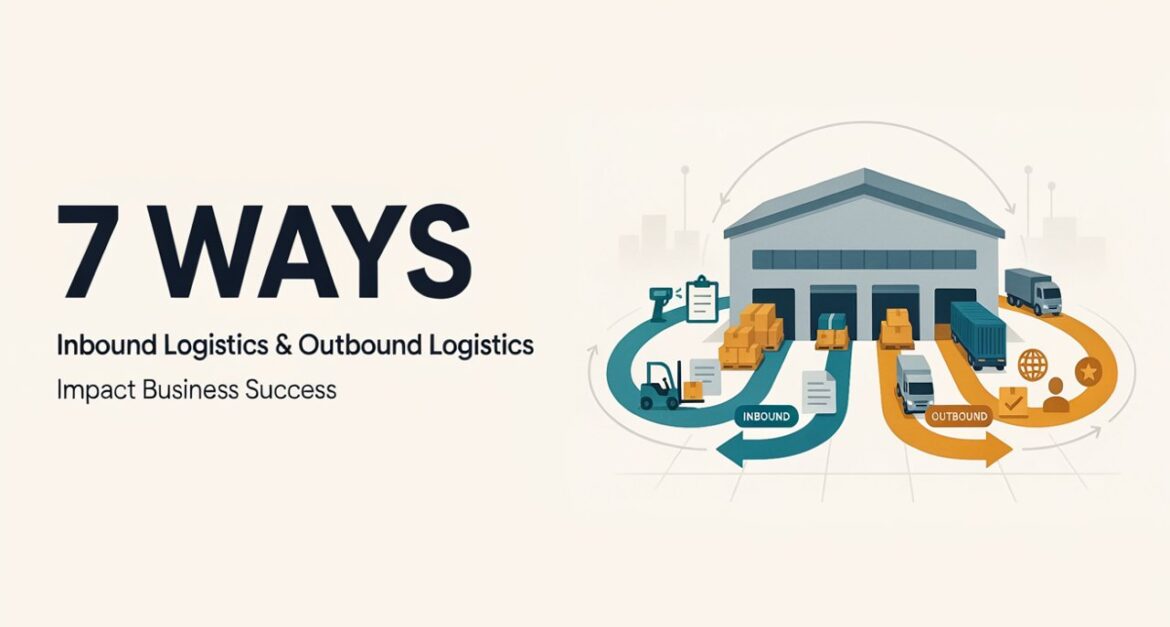
While the two terms are often used together, they represent opposite directions of the supply chain.
| Inbound Logistics | Outbound Logistics |
| Movement of goods into a business | Movement of goods from a business to customers |
| Focuses on suppliers | Focuses on customers |
| Includes receiving and storage | Includes shipping and delivery |
| Supports inventory availability | Supports customer fulfillment |
| Managed through procurement and supplier coordination | Managed through order fulfillment and last-mile delivery |
| Success measured by cost, accuracy, and timeliness of incoming stock | Success measured by delivery speed and customer satisfaction |
Put simply: inbound logistics fills the warehouse; outbound logistics empties it.
Inbound Logistics vs. Outbound Logistics: Why Businesses Need Both
Neither side of logistics can function well without the other. Here’s how inbound and outbound operations work together:
- Supply chain efficiency – Reliable inbound flow ensures outbound teams always have stock to fulfill orders.
- Inventory availability – Poor inbound planning leads to stockouts, which directly damage outbound performance.
- Delivery speed – Fast, accurate inbound receiving reduces processing time before goods can be shipped out.
- Customer satisfaction – Customers only ever see the outbound side, but its reliability is built entirely on inbound performance.
- Operational costs – Inefficient inbound processes (demurrage fees, rushed freight, warehouse congestion) increase overall logistics costs, which often get passed on to customers.
Think of it like a restaurant kitchen: outbound logistics is the waiter delivering food to the table, but inbound logistics is the delivery truck bringing fresh ingredients every morning. Without the second, the first can’t happen.Illustrative benchmark data based on common industry-reported ranges — actual results vary by sector and region. Cost reduction and supply chain resilience tend to show the strongest gains, which makes sense: most inbound inefficiencies (rush freight, demurrage, warehouse congestion) are directly tied to cost and reliability.
Key Activities Involved in Inbound Logistics
A well-run inbound logistics operation depends on several coordinated activities:
- Supplier communication – ongoing coordination on lead times, order changes, and documentation
- Freight transportation – choosing between sea, air, or land freight based on cost and urgency
- Customs clearance – handling import duties, tariffs, and regulatory documentation
- Receiving and unloading – physically accepting and offloading shipments at the facility
- Warehouse management – organizing storage locations for efficient retrieval
- Inventory tracking – maintaining accurate, real-time stock records
- Quality control – verifying that received goods meet specifications and are free of damage
Each activity plays a small but critical role. Skipping quality control, for example, might save five minutes at receiving — but could cost days later if defective stock reaches production or customers.
Challenges Businesses Face in Inbound Logistics
Even well-managed businesses run into recurring inbound logistics problems:
- Delayed shipments – port congestion, weather, or supplier production delays
- Supplier communication problems – unclear specifications or missed order updates
- Customs delays – incomplete documentation or regulatory holdups at borders
- Poor inventory visibility – not knowing what’s in transit versus what’s already in the warehouse
- Warehouse congestion – limited space or inefficient layout slowing down receiving
- High transportation costs – rising freight rates, fuel surcharges, and last-minute expedited shipping
Fun fact: Global shipping data shows that even a one-day average delay at major ports can cost import-dependent businesses thousands of dollars in demurrage and storage fees — which is why customs clearance expertise is one of the most valuable (and least glamorous) parts of inbound logistics.
How Technology Is Improving Inbound Logistics
Modern inbound logistics has moved far beyond spreadsheets and phone calls. Key technologies now shaping the industry include:
- GPS tracking – real-time visibility into where shipments are during transit
- Warehouse Management Systems (WMS) – digital coordination of receiving, storage, and picking
- IoT sensors – monitoring temperature, humidity, and handling conditions for sensitive cargo
- Real-time inventory tracking – syncing inbound receipts with stock systems instantly
- Automation – barcode scanning, automated sorting, and robotic warehouse handling
- Data analytics – forecasting demand and identifying inbound bottlenecks before they cause delays
These tools don’t just improve speed — they reduce human error, which is one of the most common (and costly) causes of inbound logistics mistakes.
Logistics Inbound Marketing: How Logistics Companies Attract More Customers
While inbound logistics is about moving physical goods, “logistics inbound marketing” is a completely different concept — it refers to how logistics and freight companies attract customers using inbound marketing strategies, rather than cold outreach or paid ads alone.
Logistics companies use inbound marketing techniques such as:
- SEO – ranking for search terms potential clients use when researching freight or warehousing partners
- Logistics blogs – publishing helpful, educational content (like this article) that answers common industry questions
- Educational content – guides, whitepapers, and explainer videos on shipping, customs, or supply chain topics
- Case studies – showcasing real client results to build trust with prospective businesses
- Email marketing – nurturing leads with updates on services, industry trends, and offers
- LinkedIn marketing – connecting with procurement managers, supply chain directors, and business owners
- Lead generation content – gated resources like rate calculators or shipping checklists that capture contact details
This is a valuable strategy for logistics providers themselves, separate from the operational meaning of inbound logistics — but worth understanding if you’re researching how logistics businesses grow their client base.
How to Improve Your Inbound Logistics Strategy
Businesses looking to strengthen their inbound logistics operations should consider:
- Improve supplier relationships – clear communication reduces delays and errors
- Use real-time shipment tracking – visibility allows proactive planning instead of reactive firefighting
- Optimize warehouse receiving – streamlined layouts and processes speed up unloading and storage
- Automate inventory updates – reduce manual entry errors with integrated systems
- Work with reliable logistics providers – experienced partners reduce customs and transportation risk
- Monitor inbound transportation costs – regularly review freight rates and consolidate shipments where possible
Small, consistent improvements across these areas compound over time into significantly lower costs and fewer disruptions.
How a Professional Logistics Company Can Improve Inbound Operations
Managing inbound logistics in-house — especially across international suppliers — is complex, time-consuming, and easy to get wrong. This is where a specialized partner like Palm Horizon KSA makes a measurable difference.
Palm Horizon KSA supports businesses across the Kingdom with end-to-end inbound logistics services, including:
- Freight forwarding – coordinating sea, air, and land freight from international suppliers
- Customs clearance – navigating Saudi import regulations and documentation efficiently
- Transportation – reliable domestic movement of goods from ports to warehouses
- Warehousing – secure, well-organized storage solutions for incoming inventory
- Inventory management – accurate, real-time stock tracking and reporting
- Supply chain support – end-to-end visibility and coordination across the entire inbound process
By partnering with Palm Horizon KSA, businesses reduce the operational burden of managing suppliers, customs, and warehousing independently — freeing up internal teams to focus on core operations while inbound logistics runs smoothly in the background.
Frequently Asked Questions About Inbound Logistics
What is inbound logistics?
Inbound logistics is the process of managing the flow of raw materials, components, or goods from suppliers into a business, including transportation, receiving, quality checks, and warehouse storage.
What is an inbound logistics example?
A common example is a retailer importing electronics from overseas suppliers — the goods are shipped, cleared through customs, delivered to a warehouse, inspected, and stored before being made available for sale.
What is the difference between inbound logistics and outbound logistics?
Inbound logistics focuses on bringing goods into a business from suppliers, while outbound logistics focuses on delivering goods from the business to customers.
Why is inbound logistics important?
It ensures businesses have the raw materials or inventory needed to keep production running and shelves stocked, directly affecting cost control and customer satisfaction.
What are the main activities involved in inbound logistics?
Key activities include supplier communication, freight transportation, customs clearance, receiving, quality control, warehouse management, and inventory tracking.
How can technology improve inbound logistics?
Tools like GPS tracking, warehouse management systems, IoT sensors, and data analytics improve visibility, reduce errors, and speed up the inbound process.
What is logistics inbound marketing?
It refers to how logistics companies use content marketing, SEO, and lead generation strategies to attract new clients — a different concept from the operational side of inbound logistics.
Conclusion
Inbound logistics may not be the most visible part of a business, but it’s one of the most decisive. From supplier coordination to customs clearance to warehouse storage, every step shapes how reliably a business can serve its customers — and how much it costs to do so.
For companies operating in Saudi Arabia’s fast-growing import and retail sectors, getting inbound logistics right isn’t optional — it’s foundational. Businesses that invest in strong supplier relationships, real-time tracking technology, and experienced logistics partners consistently outperform those that treat inbound operations as an afterthought.
If your business is looking to streamline supplier coordination, customs clearance, warehousing, or inventory management, Palm Horizon KSA offers the end-to-end inbound logistics expertise needed to keep your supply chain moving — efficiently, reliably, and cost-effectively.